
Best Hair Treatment in Coimbatore: How to Find the Right Option for Your Hair Loss
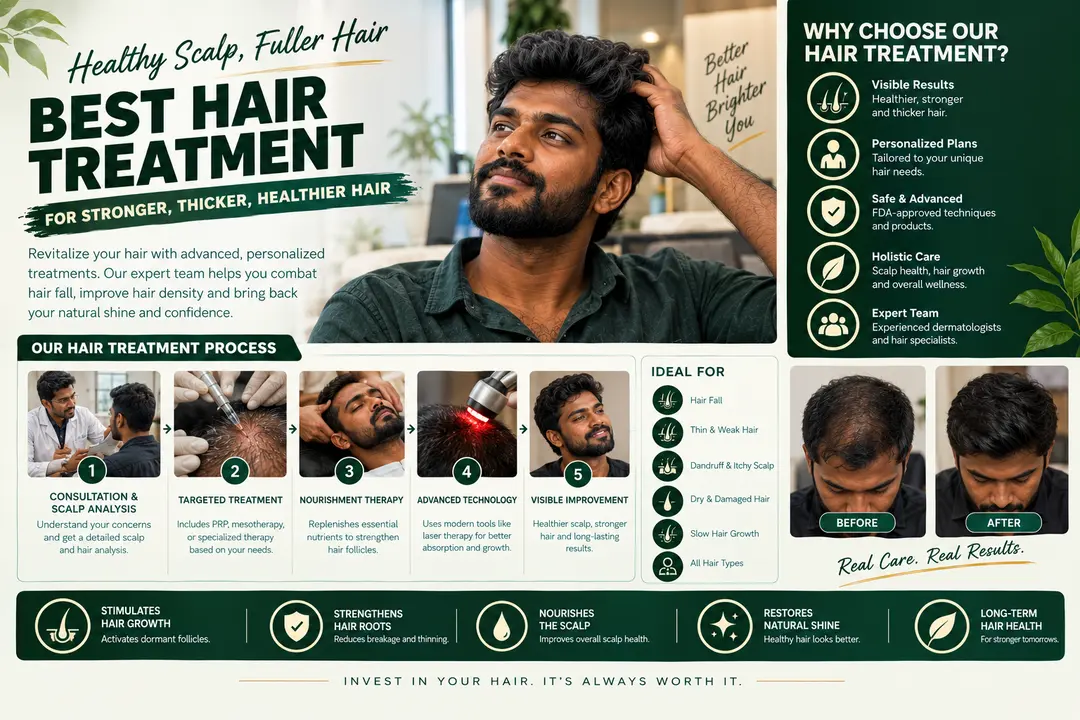
Everyone searching for the best hair treatment wants the same thing: something that actually works. But ask any experienced hair treatment doctor and you’ll hear the same honest answer. There is no single best hair treatment. There is only the treatment that fits the cause of your hair loss. A medicated shampoo that clears dandruff won’t correct hormonal thinning. PRP won’t unblock follicles clogged with sebum on its own. A hair transplant isn’t the right step while the scalp is still inflamed. Choosing well means understanding what is going on first, and then matching the treatment to it. At Keva Aesthetic Clinic in R.S. Puram, this is how we approach every patient who walks in from Gandhipuram, Peelamedu, and across Coimbatore. This guide explains how causes and treatments line up, what each option can and can’t do, and how to prepare for a consultation with a hair treatment doctor near you.
Why There Is No One-Size-Fits-All Hair Treatment
Hair loss is a symptom, not a diagnosis. The same visible problem, more hair in the brush or a thinner parting, can come from very different causes:
- Genetics and hormones (pattern hair loss)
- Nutritional gaps such as low iron or protein
- Stress, illness, surgery, or a crash diet
- Pregnancy and post-partum changes
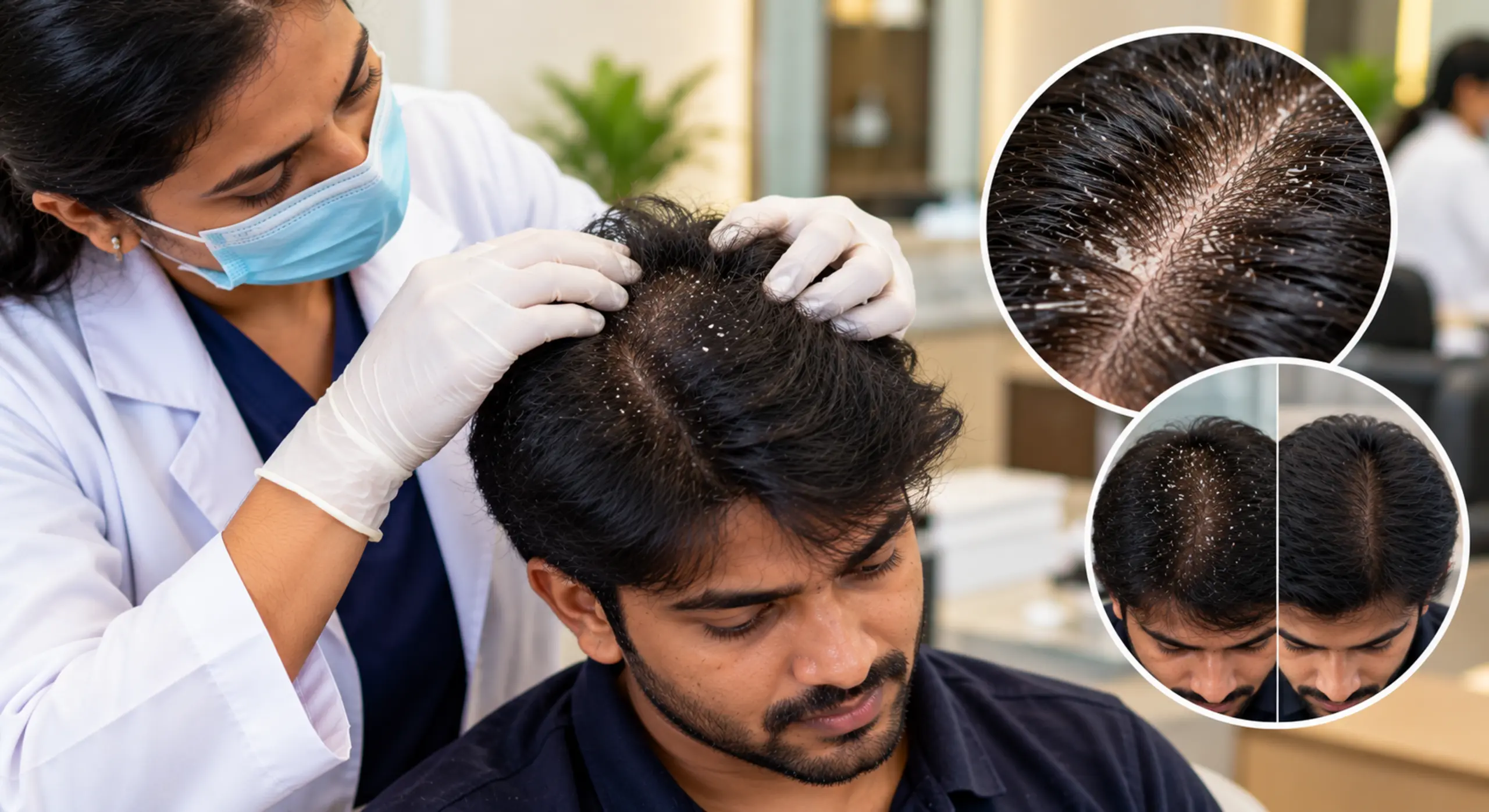
- Scalp conditions such as dandruff, sebum buildup, or inflammation
- Thyroid or other hormonal imbalances
- Tight hairstyles that pull on the follicle
- Certain medications
A treatment aimed at the wrong cause wastes months and sometimes lets the real problem progress. That’s why the best hair treatment always begins with a diagnosis, including a close look at the scalp and follicles through digital trichoscopy, rather than a product recommendation.
Matching the Treatment to the Cause
The table below is a general guide to how patterns and treatments line up. It isn’t a diagnosis, since many people have more than one cause at once.
What you’re noticing | Commonly linked causes | Options usually considered |
Heavy shedding a few months after illness, childbirth, or a crash diet | Temporary shedding triggered by stress on the body | Correcting the trigger, nutritional support, gentle scalp care; many cases settle with time |
Gradual thinning at the hairline and crown, or a widening parting | Inherited pattern hair loss, hormonal influence | Medical management advised by a doctor, PRP, low-level laser therapy; hair transplant in suitable cases |
Itchy, flaky, or very oily scalp along with hair fall | Dandruff, sebum buildup, follicular plugging | Medicated shampoos, scalp detoxification therapy, correcting product habits |
Thinning along with irregular periods, weight change, or tiredness | Hormonal or thyroid factors | Medical evaluation and tests, treating the underlying condition alongside hair care |
Thinning along the hairline or temples where hair is pulled tight | Traction from tight styles | Changing styling habits early, scalp care; transplant only for established loss |
Sudden bald patches, or a smooth, shiny scalp area | Needs prompt examination | See a doctor early, since the cause must be identified before anything else |
Hair Treatment Options in Plain Language
Scalp care and medicated shampoos. The foundation of good hair care. Essential when dandruff, oiliness, or irritation is involved, but not enough on its own for pattern hair loss.
Scalp detoxification therapy. A clinical treatment that dissolves buildup and clears follicle openings. Useful where sebum, product residue, and dead skin are limiting healthy growth.
Prescribed medication. Topical or oral treatments chosen by the doctor based on diagnosis and your health history. They work best with consistent use, and they are not something to start on your own.
PRP (platelet-rich plasma) therapy. Uses your own plasma to support follicle activity in thinning areas. It is often part of a combined plan rather than a stand-alone fix.
Low-level laser therapy (LLLT). A non-invasive option sometimes used alongside other treatments to support existing hair.
Nutritional correction. If tests or history point to deficiencies, correcting them is often a quiet but important part of recovery.
Hair transplantation (FUE and DHI). The long-term option for areas where follicles have been lost. Techniques such as DHI (Direct Hair Implantation) place grafts with precise control over angle and direction. It is considered after underlying causes and scalp health have been addressed.
Why the Best Plan Is Usually a Combination
Real-world hair problems rarely have a single cause, so the most effective plans usually combine approaches. For example, a patient with thinning and an oily, inflamed scalp may need scalp detoxification first, followed by medical management and PRP. Someone planning a hair transplant often continues medical treatment afterward to protect the hair that remains.
A good plan is staged and reviewed. It changes as your scalp responds, rather than locking you into a fixed package on day one.
What Results and Timelines to Expect
Hair grows in cycles, so no treatment produces results overnight. As a general guide:
- Most non-surgical treatments need at least three to six months of consistent use before improvement is clearly visible.
- Transplanted hair grows in gradually, and full results often take close to a year.
- Some conditions, such as pattern hair loss, need ongoing maintenance to hold results.
Be cautious of any clinic that promises guaranteed or very fast results. Honest timelines are one of the clearest signs of a reliable hair treatment doctor.
Hair Treatment for Women, Including Female Hair Transplant
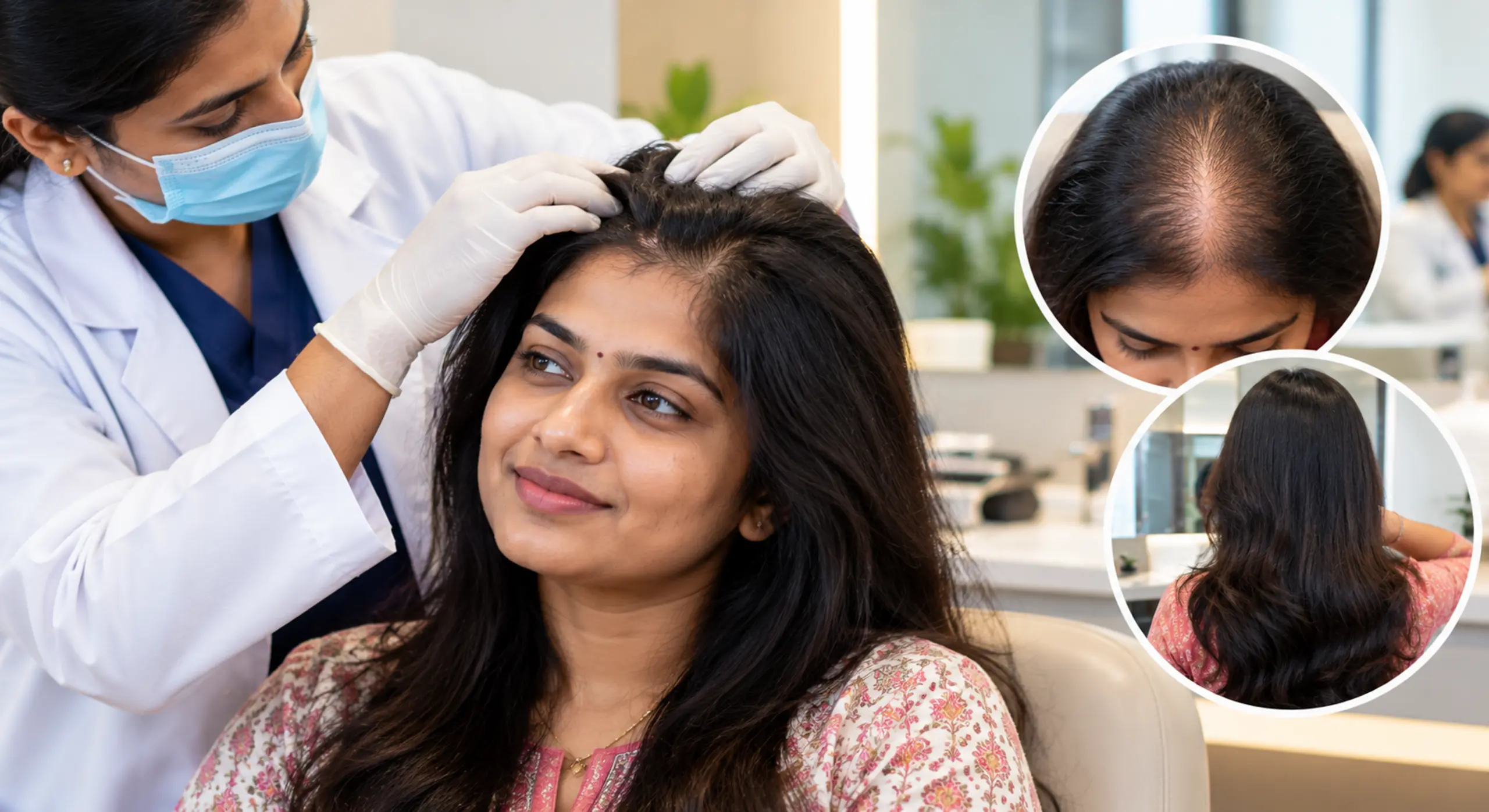
Women’s hair loss often shows up as overall thinning or a wider parting rather than a receding hairline, and it frequently has hormonal, nutritional, or post-partum roots. That means the best hair treatment for a woman often begins with a broader evaluation, and sometimes blood tests, before any procedure is discussed.
For some women, thinning remains stubborn despite proper treatment, or affects a specific area such as the hairline, parting, or a region of traction damage. In those cases, female hair transplant can be a good option, provided the donor hair is healthy and stable and the underlying cause is under control.
Female hair transplant cost in India varies widely, and the main factors are:
- The number of grafts needed for the area being treated
- The technique used, such as FUE or DHI
- The extent of loss and the design work involved
- Whether other treatments like PRP are part of the plan
- The clinic’s experience and facilities
Because these factors differ for every patient, a reliable estimate only comes after a scalp assessment and consultation.
How to Prepare for a Visit to a Hair Treatment Doctor Near You
A little preparation makes your first consultation much more useful. Consider bringing:
- Any recent blood test reports, especially thyroid, iron, or vitamin results
- A list of medications, supplements, and hair products you currently use
- Photos of your hair from a year or two ago, if you have them
- Notes on when the hair fall started and anything that happened around then, such as illness, childbirth, or a big lifestyle change
- Your family history of hair loss, if you know it
- Your questions about treatment options, timelines, and follow-up
Your visit then covers a detailed history, a scalp and follicle examination, a clear explanation of the likely cause, and a personalised plan with a realistic timeline.
Why Choose Keva Aesthetic Clinic for Hair Treatment
- Diagnosis first, using digital trichoscopy before recommending treatment
- A full range of options, from scalp therapy and regrowth treatment to FUE and DHI hair transplantation
- Care that takes women’s hair concerns seriously, including when female hair transplant is and isn’t the right step
- Honest timelines and personalised, staged plans
- A convenient R.S. Puram location for patients across Gandhipuram and Peelamedu
By the Trichology & Hair Care Team, Keva Aesthetic Clinic, Coimbatore
Book a Consultation
If you’ve been searching for the best hair treatment or the best hair clinic in Coimbatore, the most useful next step is a proper scalp evaluation with a hair treatment doctor. Visit us at:
Keva Aesthetic Clinic
Serving patients across Gandhipuram, Peelamedu, R.S. Puram, and greater Coimbatore.
Book Your Consultation at Keva Hair Care Today!
Tired of dull, lifeless, frizzy hair? Let Keva Hair Care Clinic, the best hair clinic Coimbatore, transform your hair and your confidence.
📍 Visit us at:
Keva Hair Care Clinic, 3rd Floor, Harmony Complex,
Diwan Bahadur Road, R.S. Puram, Coimbatore – 641002
(Above ICICI Bank & Pandiyan Medicals)
📞 Call Now: +91 95855 25905
🌐 Website: https://kevahaircare.com
📲 Book Online or Walk-In Today!
Close to Gandhipuram, Peelamedu, and R.S. Puram
Hair treatment is rarely a single appointment, so location matters. Our clinic is in R.S. Puram, within about 5 km of Gandhipuram and Peelamedu, which makes regular reviews easy to keep. Whether you know us as Keva Aesthetic Clinic, Keva Coimbatore, Keva Hair Clinic, Keva Skin Clinic, Keva Hair and Skin Care, or Keva Clinic – Hair Skin Body, you’ll find the same team at the same address.

FAQs
Which is the best hair treatment for hair fall?
It depends on the cause. Temporary shedding, scalp conditions, hormonal thinning, and pattern hair loss each respond to different approaches, which is why diagnosis comes before treatment.
Is PRP the best hair treatment?
PRP helps many patients, but it isn’t the best option for everyone. It tends to work well as part of a combined plan, and it suits some causes of hair loss far better than others.
How do I find a hair treatment doctor near me that I can trust?
Look for a clinic that examines your scalp properly before recommending anything, explains the likely cause in plain language, offers more than one option, and gives realistic timelines. A location close to home also makes it easier to keep up with follow-ups.
How long before I see results from the best hair treatment?
Most treatments need three to six months of consistency before clear improvement shows, and hair transplant results develop over many months, often close to a year.
Can women have a hair transplant, and what does it cost?
Yes, in the right cases. Suitability depends on donor hair quality, the pattern of loss, and the underlying cause. Female hair transplant cost in India depends on graft count, technique, and the area treated, so a consultation is the only way to get an accurate figure.
Will my results last?
That depends on the cause. Temporary shedding can resolve fully once the trigger is addressed, while pattern hair loss usually needs ongoing care to maintain results. Transplanted hair is generally expected to last, though the rest of your natural hair still needs protecting.