Female Hair Transplant in Coimbatore: Who It Suits, How It Works, and What It Costs
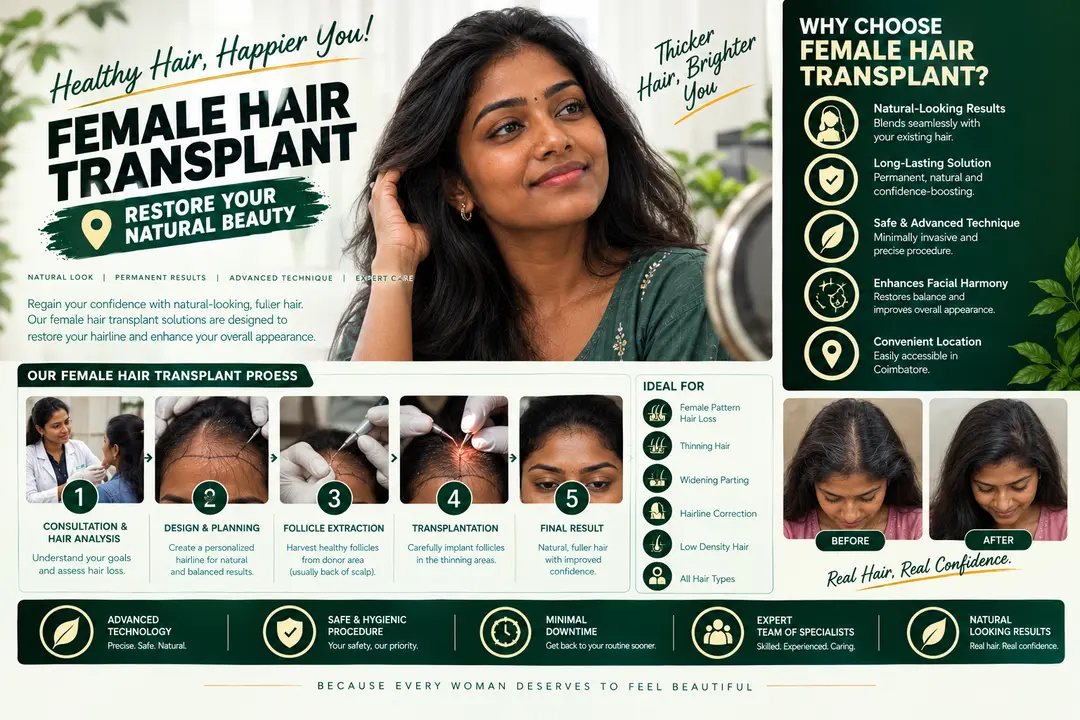
Thinning hair is hard on anyone, but women often face it quietly. A wider parting, a smaller ponytail, a hairline that has moved back a little: these changes are easy to hide for a while and hard to ignore once you notice them. Many women spend years trying shampoos, serums, and supplements before asking whether a female hair transplant could help. The honest answer is that it can, for the right person. A female hair transplant isn’t a first step, and it isn’t suitable for every woman with thinning hair. But when the cause has been identified and the donor hair is healthy, it can restore density in a way that medicines alone sometimes can’t. At Keva Aesthetic Clinic in R.S. Puram, we see women from Gandhipuram, Peelamedu, and across Coimbatore who want a straight answer about whether a transplant is right for them, what it involves, and what it costs. This guide covers all three.
What Is a Female Hair Transplant?
A hair transplant moves healthy hair follicles from a donor area, usually the back or sides of the scalp where hair tends to be more resistant to thinning, to the areas where hair has become sparse. Once the transplanted follicles settle in, they continue to grow hair in their new location.
For women, the goal is rarely a dramatic change. It’s usually to rebuild density at the parting or crown, soften a high or receding hairline, or fill areas thinned by traction or scarring, in a way that looks completely natural.
Why Women Lose Hair, and Why It Looks Different From Men’s Hair Loss
Women’s hair loss tends to follow different patterns:
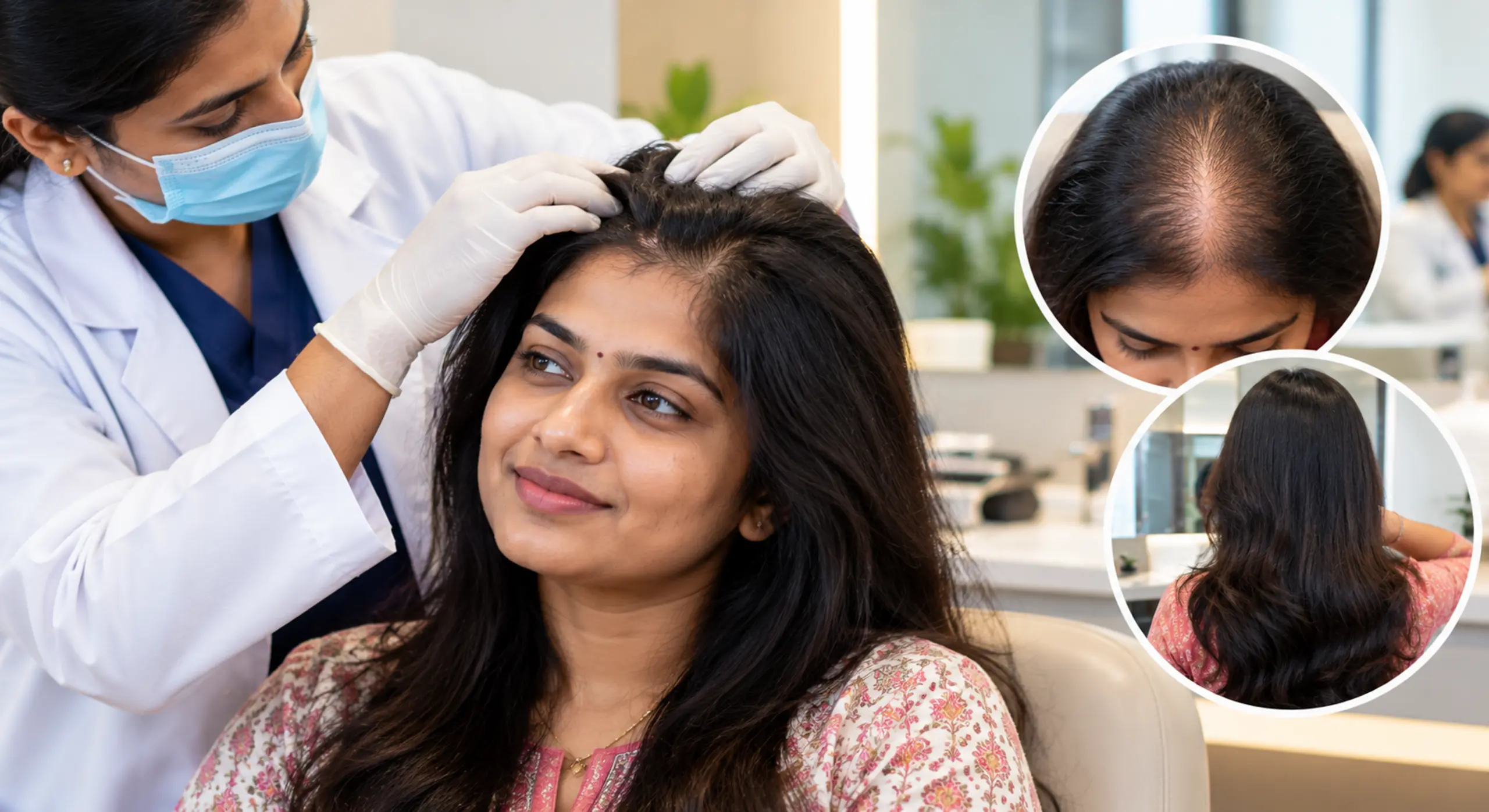
- Overall thinning across the top of the scalp, with a widening parting
- Reduced density at the crown
- A hairline that has gradually moved back or become thinner
- Thinning at the temples or hairline from long-term tight hairstyles
- Patches where hair was lost after scarring from injury, burns, or earlier surgery
Behind these patterns are causes such as inherited female pattern hair loss, hormonal changes (including PCOS, thyroid problems, pregnancy, and menopause), nutritional gaps, stress, and scalp conditions. Because the causes differ so much, the first step is always finding out which one applies to you.
Is a Female Hair Transplant Right for You?
You may be a good candidate if:
- Your hair loss is stable, or under control with treatment
- You have healthy, dense donor hair
- Your thinning is concentrated in specific areas such as the parting, hairline, or crown, or comes from traction or scarring
- Any underlying medical or nutritional cause has been identified and addressed
- Your expectations about timing and results are realistic
A transplant may not be the right option, at least not yet, if:
- Thinning is widespread and the donor area is thin as well
- The cause hasn’t been identified, or hair loss is still actively progressing
- There is an active scalp or inflammatory condition that needs treating first
- You are hoping for a result that the available donor hair can’t deliver
An honest assessment sometimes means telling a patient to wait, or to start with medical treatment first. That is part of doing this properly.
Why Diagnosis Comes Before Surgery
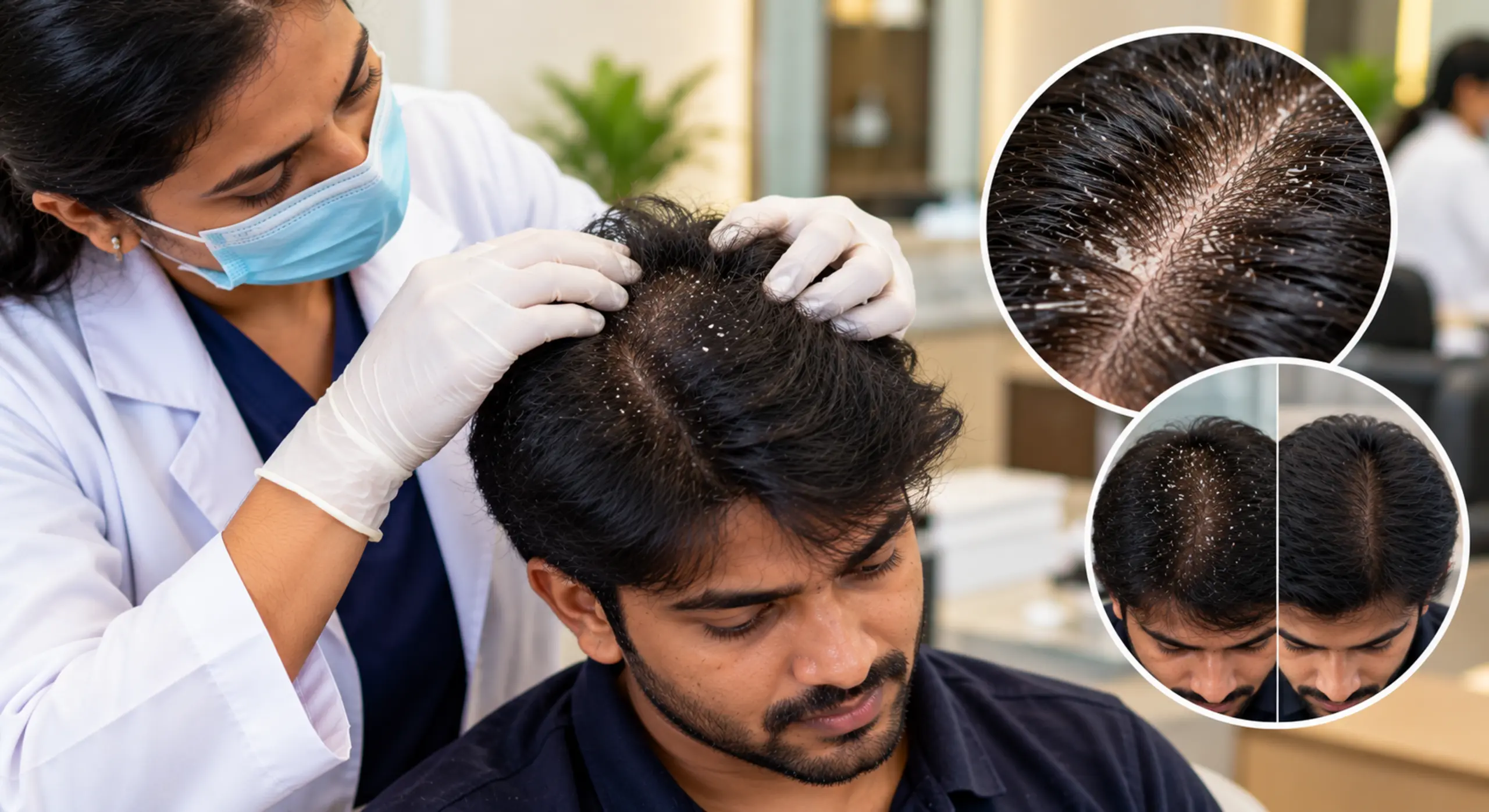
A proper consultation starts with your history and a scalp examination. Digital trichoscopy lets the doctor measure hair density and follicle health in both the thinning area and the donor area, which shows how much a transplant can realistically achieve. Blood tests, for example for thyroid function, iron, or vitamin levels, are advised where your history points to them.
This matters because a transplant moves hair, but it doesn’t change the reason your hair was thinning. Transplanted hair is generally expected to last, while the natural hair around it can keep thinning if the cause isn’t treated. That is why medical treatment often continues alongside, or after, a transplant.
FUE and DHI: Technique Options for Women
Two techniques are commonly used:
- FUE (Follicular Unit Extraction): Individual follicles are extracted from the donor area, small channels are made in the recipient area, and the grafts are placed into them.
- DHI (Direct Hair Implantation): Follicles are extracted in the same way, then implanted using a pen-like implanter that places each graft directly, with close control over angle, direction, and depth.
Which one suits you depends on the area being treated, the number of grafts needed, your hair characteristics, and your goals. Many women also ask whether the whole head has to be shaved. That depends on the technique, the area being treated, and the clinic’s approach, and some women can have the procedure with limited shaving. It is worth asking about at your consultation.
What Happens on the Day of the Procedure
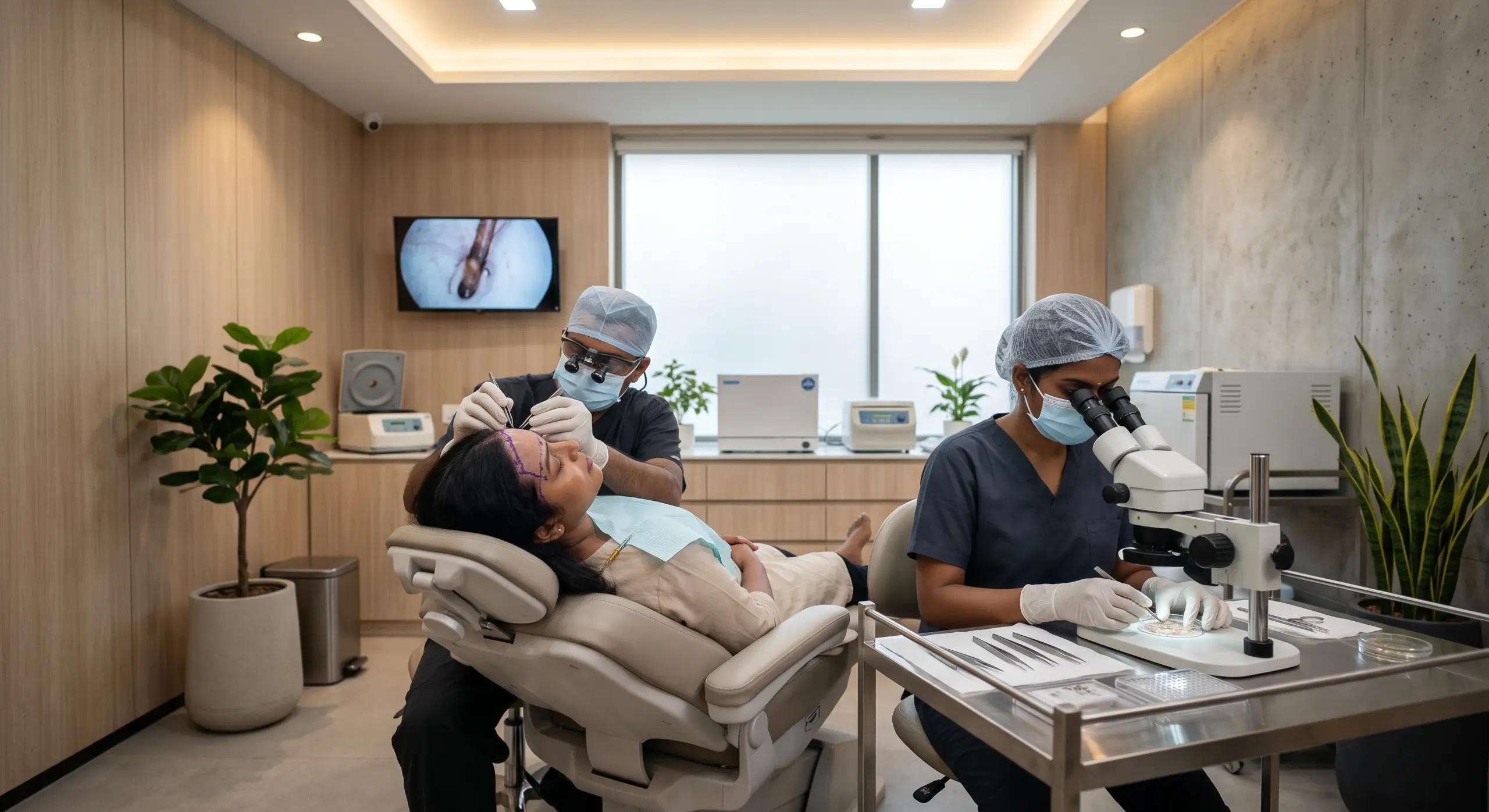
- Planning and design. Your doctor confirms the treatment area and plans the hairline or parting design to suit your face and existing hair.
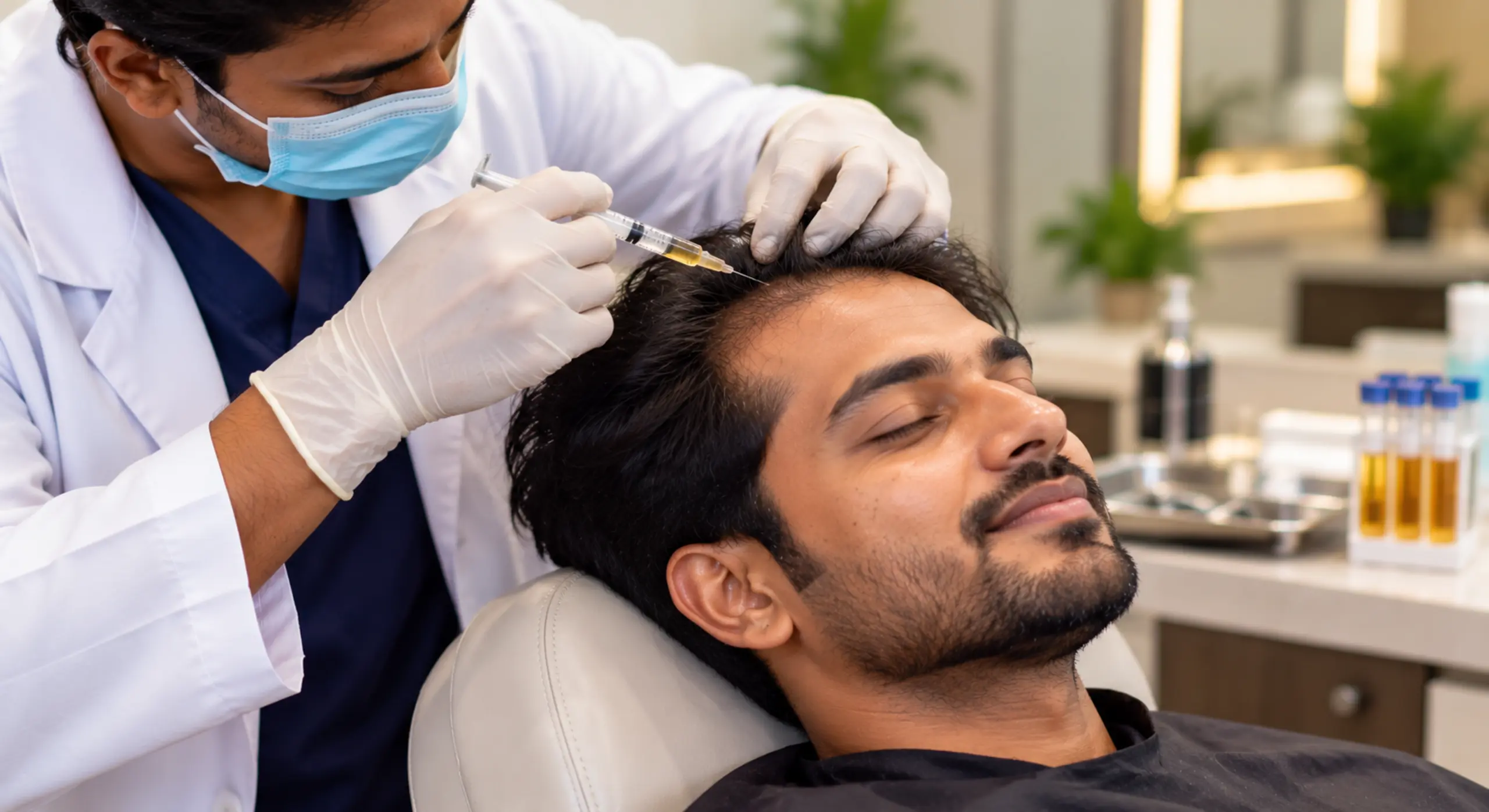
- Comfort first. The procedure is done under local anaesthesia, so you stay awake but comfortable.
- Graft extraction. Healthy follicles are carefully taken from the donor area.
- Implantation. The grafts are placed in the treatment area at a natural angle and direction, matching the growth pattern of your existing hair.
- Aftercare instructions. Before you leave, you receive clear guidance on washing, protecting the scalp, medicines, and follow-up visits.
Recovery and Results Timeline
Everyone heals at their own pace, but this is a typical pattern:
When | What to expect |
First few days | Mild redness, swelling, and tenderness, with small scabs at the graft sites. Follow your aftercare instructions closely. |
Around 1 to 2 weeks | Scabs usually clear and the scalp settles. Most people return to normal routines as advised by the clinic. |
Weeks 2 to 8 | Transplanted hairs often shed. This is a normal part of the hair cycle and does not mean the transplant has failed. |
Months 3 to 4 | New growth begins, often fine at first. |
Months 6 to 9 | Hair gradually thickens and density improves. |
Around 12 months, sometimes longer | Results approach their final look. |
Female Hair Transplant Cost in India: What Decides the Price
There is no single national price for a female hair transplant, which is why the numbers you find online vary so widely. The cost depends mainly on:
- The number of grafts. This is usually the biggest factor, and it depends on the size of the area and the density you are aiming for.
- The technique used, such as FUE or DHI.
- The extent of loss and the design work involved, for example a detailed hairline design.
- The experience of the team and the facilities of the clinic.
- What is included. Consultation, tests, medicines, adjunct treatments such as PRP, and follow-up reviews may or may not be part of the quote.
- The pricing model. Some clinics charge per graft, others quote a package, so it helps to ask which one applies.
When you compare quotes, ask for a written estimate that states the planned graft count and what is covered, so you are comparing like with like. Price alone shouldn’t decide the choice, since the planning, the donor hair management, and the team performing the procedure matter just as much to the result.
Hair Transplant Cost in Coimbatore
The same factors set the price of a hair transplant in Coimbatore. A fair figure can only be given after your scalp has been examined and your graft requirement estimated, so we prefer to quote after a consultation rather than publish a number that may not apply to you.
There is a practical side to cost as well. A transplant involves follow-up visits over the following months, and a clinic close to home makes those reviews easier and cheaper to keep.
Choosing a Hair Transplant Clinic in Coimbatore: Questions to Ask
Before you commit, it helps to ask:
- Who will examine my scalp and plan the procedure, and who will carry it out?
- How many grafts do you plan to use, and why?
- How will you protect my donor area so it isn’t over-harvested?
- Is any medical treatment part of the plan, and for how long?
- What follow-up is included, and what does it cost if it isn’t?
- Can you explain the realistic outcome for my kind of hair loss?
A clinic that answers these clearly, and is willing to tell you when a transplant isn’t the right step yet, is one you can trust with the decision.
Why Choose Keva Aesthetic Clinic for Female Hair Transplant
- Diagnosis first, with digital trichoscopy and proper evaluation before any procedure is recommended
- Honest advice on whether a transplant is right for you now, or whether medical treatment should come first
- FUE and DHI options, matched to your hair and goals
- Clear, written estimates and a follow-up plan
- A convenient R.S. Puram location for patients across Gandhipuram and Peelamedu
Book Your Consultation
If you’re considering a female hair transplant, or simply want to know whether it could help you, the most useful first step is a proper scalp evaluation at a hair transplant clinic that will give you an honest answer. Visit us at:
Keva Aesthetic Clinic
3rd Floor, Harmony Complex, No 424K, Diwan Bahadur Rd, above ICICI Bank, above Pandiyan Medicals, R.S. Puram, Coimbatore, Tamil Nadu 641002
📞 +91 95855 25905
✉️ info@kevahaircare.com
Serving patients across Gandhipuram, Peelamedu, R.S. Puram, and greater Coimbatore.
Book Your Consultation at Keva Hair Care Today!
Tired of dull, lifeless, frizzy hair? Let Keva Hair Care Clinic, the best hair clinic Coimbatore, transform your hair and your confidence.
📍 Visit us at:
Keva Hair Care Clinic, 3rd Floor, Harmony Complex,
Diwan Bahadur Road, R.S. Puram, Coimbatore – 641002
(Above ICICI Bank & Pandiyan Medicals)
📞 Call Now: +91 95855 25905
🌐 Website: https://kevahaircare.com
📲 Book Online or Walk-In Today!
Aftercare and Follow-Up, Close to Home
The weeks after a transplant are when good aftercare counts most. If you’re searching for hair care near me for those review visits, it helps to choose a clinic you can reach easily. Our clinic in R.S. Puram is within about 5 km of Gandhipuram and Peelamedu. Whether you know us as Keva Aesthetic Clinic, Keva Coimbatore, Keva Hair Clinic, Keva Skin Clinic, Keva Hair and Skin Care, or Keva Clinic – Hair Skin Body, you will find the same team at the same address, looking after hair, skin, and your overall care.

FAQs
1. Can women have a hair transplant?
Yes, in the right cases. Suitability depends on donor hair quality, the pattern of loss, and whether the underlying cause has been identified and treated. A consultation and scalp analysis will show whether a female hair transplant is appropriate.
2. Will I have to shave my head?
It depends on the technique, the area being treated, and the clinic’s approach. Some women can have the procedure with limited shaving. Ask about this at your consultation so you know what to expect.
3. Is a female hair transplant permanent?
Transplanted hair is generally expected to last, because it comes from donor areas that are more resistant to thinning. Your natural hair around it can still thin over time, which is why ongoing care is often part of the plan.
4. Is the procedure painful?
It is done under local anaesthesia, so most women feel little during the session. Some tenderness and tightness in the first few days is normal.
5. What is the female hair transplant cost in India?
It varies with the number of grafts, the technique, the extent of loss, the clinic, and what the quote includes. The most reliable way to get an accurate figure is a consultation and scalp assessment.
6. How long before I see results?
New growth usually starts around three to four months, with gradual thickening over the following months and results approaching their final look at around a year, sometimes longer.
7. I’m pregnant or planning a pregnancy. Can I still consider a transplant?
Pregnancy and the months after it can cause temporary shedding and hormonal shifts, so timing is worth discussing with your doctor before deciding.