
Female Hair Transplant in Coimbatore: Who It Suits, How It Works, and What It Costs
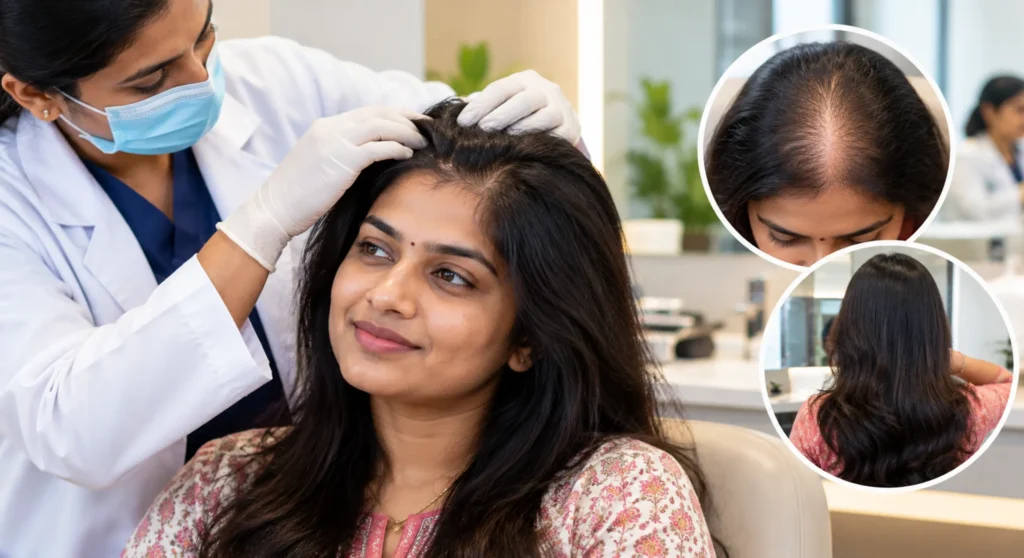
Thinning hair is hard on anyone, but women often face it quietly. A wider parting, a smaller ponytail, a hairline that has moved back a little: these changes are easy to hide for a while and hard to ignore once you notice them. Many women spend years trying shampoos, serums, and supplements before asking whether a female hair transplant could help. The honest answer is that it can, for the right person. A female hair transplant isn’t a first step, and it isn’t suitable for every woman with thinning hair. But when the cause has been identified and the donor hair is healthy, it can restore density in a way that medicines alone sometimes can’t. At Keva Aesthetic Clinic in R.S. Puram, we see women from Gandhipuram, Peelamedu, and across Coimbatore who want a straight answer about whether a transplant is right for them, what it involves, and what it costs. This guide covers all three. What Is a Female Hair Transplant? A hair transplant moves healthy hair follicles from a donor area, usually the back or sides of the scalp where hair tends to be more resistant to thinning, to the areas where hair has become sparse. Once the transplanted follicles settle in, they continue to grow hair in their new location. For women, the goal is rarely a dramatic change. It’s usually to rebuild density at the parting or crown, soften a high or receding hairline, or fill areas thinned by traction or scarring, in a way that looks completely natural. Why Women Lose Hair, and Why It Looks Different From Men’s Hair Loss Women’s hair loss tends to follow different patterns: Overall thinning across the top of the scalp, with a widening parting Reduced density at the crown A hairline that has gradually moved back or become thinner Thinning at the temples or hairline from long-term tight hairstyles Patches where hair was lost after scarring from injury, burns, or earlier surgery Behind these patterns are causes such as inherited female pattern hair loss, hormonal changes (including PCOS, thyroid problems, pregnancy, and menopause), nutritional gaps, stress, and scalp conditions. Because the causes differ so much, the first step is always finding out which one applies to you. Is a Female Hair Transplant Right for You? You may be a good candidate if: Your hair loss is stable, or under control with treatment You have healthy, dense donor hair Your thinning is concentrated in specific areas such as the parting, hairline, or crown, or comes from traction or scarring Any underlying medical or nutritional cause has been identified and addressed Your expectations about timing and results are realistic A transplant may not be the right option, at least not yet, if: Thinning is widespread and the donor area is thin as well The cause hasn’t been identified, or hair loss is still actively progressing There is an active scalp or inflammatory condition that needs treating first You are hoping for a result that the available donor hair can’t deliver An honest assessment sometimes means telling a patient to wait, or to start with medical treatment first. That is part of doing this properly. Why Diagnosis Comes Before Surgery A proper consultation starts with your history and a scalp examination. Digital trichoscopy lets the doctor measure hair density and follicle health in both the thinning area and the donor area, which shows how much a transplant can realistically achieve. Blood tests, for example for thyroid function, iron, or vitamin levels, are advised where your history points to them. This matters because a transplant moves hair, but it doesn’t change the reason your hair was thinning. Transplanted hair is generally expected to last, while the natural hair around it can keep thinning if the cause isn’t treated. That is why medical treatment often continues alongside, or after, a transplant. FUE and DHI: Technique Options for Women Two techniques are commonly used: FUE (Follicular Unit Extraction): Individual follicles are extracted from the donor area, small channels are made in the recipient area, and the grafts are placed into them. DHI (Direct Hair Implantation): Follicles are extracted in the same way, then implanted using a pen-like implanter that places each graft directly, with close control over angle, direction, and depth. Which one suits you depends on the area being treated, the number of grafts needed, your hair characteristics, and your goals. Many women also ask whether the whole head has to be shaved. That depends on the technique, the area being treated, and the clinic’s approach, and some women can have the procedure with limited shaving. It is worth asking about at your consultation. What Happens on the Day of the Procedure Planning and design. Your doctor confirms the treatment area and plans the hairline or parting design to suit your face and existing hair. Comfort first. The procedure is done under local anaesthesia, so you stay awake but comfortable. Graft extraction. Healthy follicles are carefully taken from the donor area. Implantation. The grafts are placed in the treatment area at a natural angle and direction, matching the growth pattern of your existing hair. Aftercare instructions. Before you leave, you receive clear guidance on washing, protecting the scalp, medicines, and follow-up visits. Recovery and Results Timeline Everyone heals at their own pace, but this is a typical pattern: When What to expect First few days Mild redness, swelling, and tenderness, with small scabs at the graft sites. Follow your aftercare instructions closely. Around 1 to 2 weeks Scabs usually clear and the scalp settles. Most people return to normal routines as advised by the clinic. Weeks 2 to 8 Transplanted hairs often shed. This is a normal part of the hair cycle and does not mean the transplant has failed. Months 3 to 4 New growth begins, often fine at first. Months 6 to 9 Hair gradually thickens and density improves. Around 12 months, sometimes longer Results approach their final look. Female Hair Transplant Cost in India: What Decides the Price There