
Hair Dandruff Treatment in Coimbatore: First Work Out Whether It Is Really Dandruff
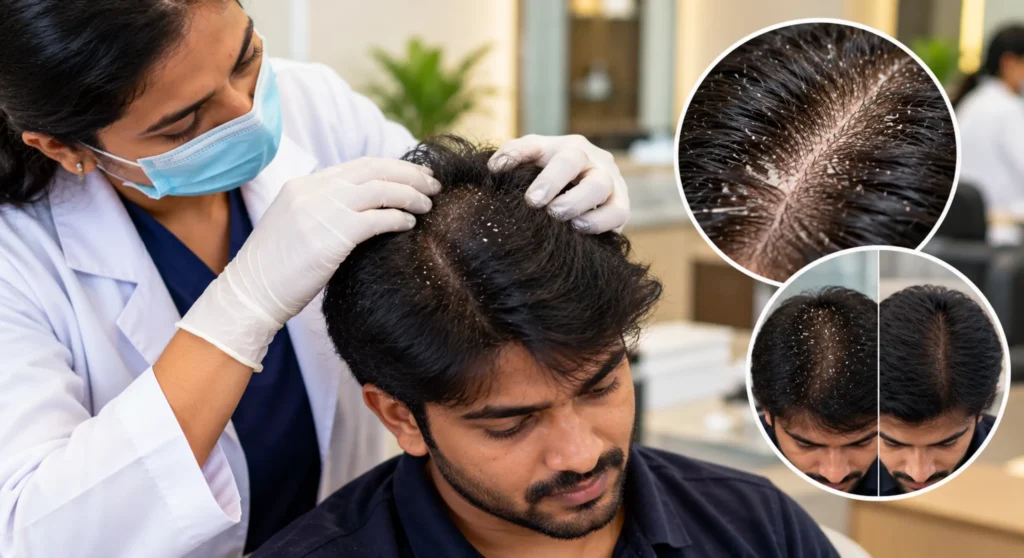
Hair, Skin & Body Specialists Serving Gandhipuram, Peelamedu & R.S. Puram, Coimbatore Many people cycle through anti-dandruff shampoos for years without lasting relief, and one common reason is that the flakes are not always dandruff. Dry scalp, product buildup, seborrheic dermatitis, and psoriasis can all shed flakes, and each needs different care. Choosing the right hair dandruff treatment starts with working out which one you have. This guide helps you do that, then explains what usually works. It comes from the team at Keva Aesthetic Clinic in R.S. Puram, also known to patients as Keva Clinic – Hair Skin Body, which looks after both scalp and skin. What Dandruff Actually Is Dandruff is a common, non-contagious scalp condition that causes flaking and often itching. It is linked to an oily scalp, a yeast called Malassezia that lives on everyone’s skin, and an individual’s sensitivity to it. It tends to come and go, which is why dandruff treatment is usually about control rather than a one-time cure. Is It Dandruff? How the Common Look-Alikes Differ These conditions can look alike, so the notes below are a guide, not a diagnosis. Dandruff: Larger, oily or yellowish-white flakes, often with an oily scalp and itching. Dry scalp: Smaller, dry, white flakes, often with tight or dry skin elsewhere, and worse in dry weather. Seborrheic dermatitis: Redness along with greasy, scaly patches, sometimes around the eyebrows, ears, or sides of the nose. It is related to dandruff but more inflamed. Scalp psoriasis: Thicker, silvery scales on well-defined red patches that may extend beyond the hairline. Product buildup: Flakes that wash away soon after using styling products, which often points to residue rather than a skin condition. If your scalp is very red, sore, thickly scaled, or oozing, or if flaking spreads beyond the scalp, have it examined rather than guessing. What Usually Helps Several ingredients are commonly used in anti-dandruff products, including zinc pyrithione, ketoconazole, selenium sulfide, and salicylic acid. They work in different ways, and which suits you depends on your scalp, so a doctor should guide the choice rather than trial and error alone. General habits that help: Regular, appropriate washing: Wash regularly enough to keep oil and flakes down, using a shampoo suited to your scalp Contact time: Leave a medicated shampoo on for the time its label or your doctor advises before rinsing Go easy on products: Heavy oils, gels, and dry shampoos can add to buildup, so use them sparingly Avoid scratching: Scratching irritates the scalp and can make flaking worse Look after the basics: Stress and poor sleep can flare dandruff in some people Always follow the directions on any medicated product or your doctor’s instructions. Hair Dandruff Treatment in Coimbatore: When to See a Doctor For mild dandruff, a good routine may be enough. Consider a consultation if: Over-the-counter products have not helped after several weeks of correct use The scalp is red, inflamed, painful, or very itchy Flaking is thick or spreads beyond the scalp You are also noticing hair shedding or thinning At Keva Aesthetic Clinic, hair dandruff treatment in Coimbatore starts with examining the scalp, and with trichoscopy where useful, so the treatment matches the cause. Patients searching for a hair dandruff solution often find the missing piece was a proper diagnosis. Dandruff and Hair Loss: Is There a Link? Dandruff on its own does not usually destroy follicles. But constant inflammation and scratching can irritate the scalp, and some people notice more shedding while their scalp is flared. If you have flaking along with thinning, it is worth having both assessed together, because other causes of hair loss can exist alongside dandruff. Hair Consultation Online If you cannot visit straight away, a hair consultation online is a practical first step. You can describe your symptoms, share clear scalp photos, and get initial guidance on whether this looks like dandruff or something else. Online guidance has limits, since examining the scalp in person is more reliable, so we use it to point you to the right next step. Hair and Skin Care Under One Roof Patients may know us as Keva Aesthetic Clinic, Keva Hair and Skin Care, Keva Skin Clinic, Keva Hair Clinic, Keva Coimbatore, or Keva Hair Care Clinic. It is one clinic. Because scalp problems are skin problems, looking at hair and skin together helps tell dandruff from look-alikes such as seborrheic dermatitis and psoriasis. Why Location Matters Dandruff treatment often needs a follow-up to check how the scalp is responding. Keva Aesthetic Clinic is in R.S. Puram, within about 5 kilometres of Gandhipuram and Peelamedu, so reviews are easy to attend for patients across all three areas. Why Choose Keva Aesthetic Clinic for Dandruff Treatment Diagnosis First: Scalp examined before treatment, with trichoscopy where useful Hair and Skin Expertise: Dandruff told apart from dry scalp, dermatitis, and psoriasis Flexible Consultations: In-clinic visits and online consultation both available Honest Follow-Up: Clear guidance and follow-up rather than shampoo roulette Conveniently Located: Serving Gandhipuram, Peelamedu, R.S. Puram, and nearby areas Keva Aesthetic Clinic (Keva Hair Care Clinic) 3rd Floor, Harmony Complex, No 424K, Diwan Bahadur Rd, above ICICI Bank, above Pandiyan Medicals, R.S. Puram, Coimbatore, Tamil Nadu 641002 Phone: +91 95855 25905 Email: info@kevahaircare.com Website: kevahaircare.com Find the cause, then treat it. Book your scalp consultation at Keva Aesthetic Clinic, Coimbatore today. Book Your Consultation at Keva Hair Care Today! Tired of dull, lifeless, frizzy hair? Let Keva Hair Care Clinic, the best hair clinic Coimbatore, transform your hair and your confidence. 📍 Visit us at:Keva Hair Care Clinic, 3rd Floor, Harmony Complex, Diwan Bahadur Road, R.S. Puram, Coimbatore – 641002 (Above ICICI Bank & Pandiyan Medicals) 📞 Call Now: +91 95855 25905 🌐 Website: https://kevahaircare.com 📲 Book Online or Walk-In Today! Book Your Dandruff Consultation Today Whether you are looking for hair dandruff treatment in Coimbatore, a lasting hair dandruff solution, or a hair consultation online to start, the team at Keva Aesthetic Clinic is here to work out what is
PRP Hair Treatment Near Me: A Session-by-Session Guide from Keva Aesthetic Clinic, Coimbatore
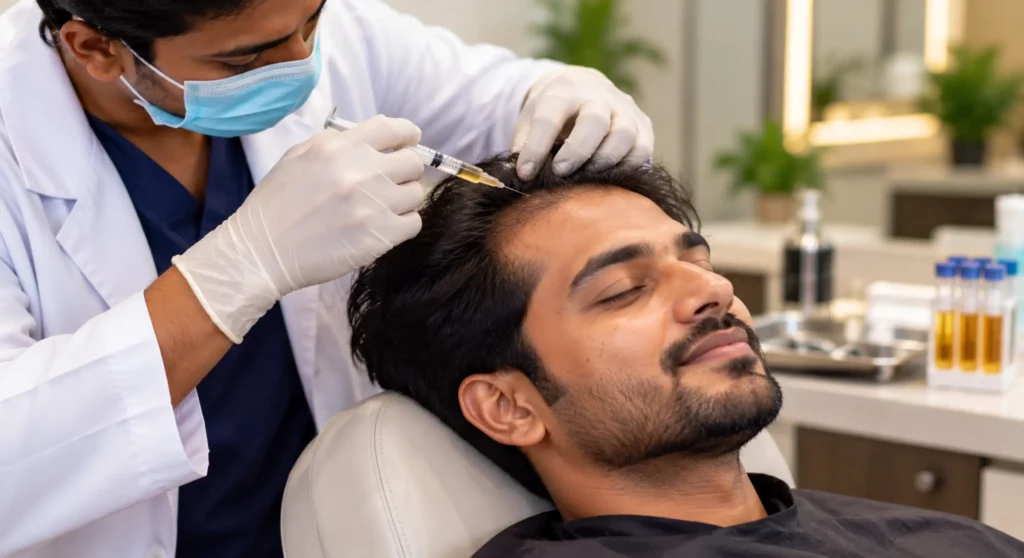
Hair, Skin & Body Specialists Serving Gandhipuram, Peelamedu & R.S. Puram, Coimbatore Most pages about PRP hair treatment describe the idea and stop. They rarely tell you what the course actually feels like: how many visits, what happens in the room, how you will know whether it is working, and when to make a different decision. This guide walks through the full journey. It comes from the team at Keva Aesthetic Clinic in R.S. Puram, also known to patients as Keva Clinic – Hair Skin Body, for anyone searching for PRP hair treatment near me across Gandhipuram, Peelamedu, and R.S. Puram. What Is PRP Hair Treatment? PRP stands for platelet-rich plasma. If you have wondered what is PRP hair treatment, in simple terms a small sample of your own blood is spun in a centrifuge to concentrate the platelet-rich part, and that plasma is injected into thinning areas of the scalp. The aim is to stimulate weakened follicles back toward a healthier growth cycle. It works on follicles that are still alive but weak. It cannot create follicles where none remain, and results vary from person to person. Before Session One: The Assessment A proper course starts with an examination, not a needle. We look at your scalp, check follicle health and density with trichoscopy, and ask about your history. This tells us whether PRP is likely to help or whether another approach, such as treating a scalp condition first, makes more sense. We also take baseline photographs, because honest results need an honest starting point. What Happens in a PRP Session Preparation: The scalp is cleaned, and numbing may be applied to keep you comfortable. Blood draw: A small amount of blood is drawn from your arm, like a routine blood test. Processing: The sample is processed in a centrifuge to separate out the platelet-rich plasma. Injection: The plasma is injected in small amounts across the areas being treated. Afterwards: Most people go home straight away. Mild tenderness or redness can follow and usually settles quickly. A session typically takes under an hour. Your clinic will give you specific instructions about washing and styling afterwards, and you should follow those. The Course: How Many Sessions? PRP is usually given as a course rather than a single treatment, commonly several sessions spaced a few weeks apart, followed by occasional maintenance sessions if needed. The exact number depends on your case. A single session rarely tells you much, which is why judging PRP after one visit is a common mistake. PRP Hair Treatment Before and After: How Results Are Tracked The real question behind prp hair treatment before after is how you can tell whether it is working. We track progress in three ways: Consistent photos: Photographs taken under the same conditions at each stage Trichoscopy: Trichoscopy readings of density and hair thickness over time Your experience: Your own observations, such as less shedding on the pillow or in the shower Using the same measures each time keeps the assessment honest and avoids relying on memory or lighting. PRP Hair Treatment Results: What Is Realistic Early on: Some people notice reduced shedding first, often within the early weeks Months 3 to 6: Finer new hairs and improved thickness may appear over the following months After the course: Results are usually judged after the full course, not part-way through PRP does not work for everyone, and it is not a cure for the underlying cause of hair loss. Results depend on the type and stage of hair loss and how the follicles respond. We would rather tell you that plainly than promise an outcome. When PRP Is Not the Right Answer Areas that are completely bald with no active follicles usually need a different approach, such as a transplant. Hair loss driven by an untreated medical or hormonal cause should be investigated with your physician first. If there is little or no response after a full, properly assessed course, it is sensible to review the plan rather than keep repeating the same treatment. How to Choose the Best PRP Hair Treatment Near Me Searching for the best PRP hair treatment near me will give you plenty of options. Instead of trusting rankings, ask each clinic: Will my scalp be properly examined before PRP is recommended? How is the plasma prepared, and is the process hygienic and consistent? How will progress be measured, and will I see photos and readings over time? What happens if PRP is not working for me? Is the cost explained clearly, including how many sessions I should expect? The best clinic for you is the one that answers these plainly. Hair and Skin Care Under One Roof Patients may know us as Keva Aesthetic Clinic, Keva Hair and Skin Care, Keva Skin Clinic, Keva Hair Clinic, Keva Coimbatore, or Keva Hair Care Clinic. It is one clinic. Looking at scalp and skin together helps us spot conditions that quietly hold hair back, so PRP is not asked to do a job it cannot do. Why Location Matters for PRP Because PRP is a course of visits, convenience affects whether you finish it. Keva Aesthetic Clinic is in R.S. Puram, within about 5 kilometres of Gandhipuram and Peelamedu, which makes regular sessions easy to keep. Why Choose Keva Aesthetic Clinic for PRP Assessment First: Scalp assessed and baseline photos taken before treatment Honest Tracking: Progress tracked with photos and trichoscopy Straight Advice: Clear advice if PRP is not the right fit Transparent Pricing: Costs explained after assessment Conveniently Located: Serving Gandhipuram, Peelamedu, R.S. Puram, and nearby areas Keva Aesthetic Clinic (Keva Hair Care Clinic) 3rd Floor, Harmony Complex, No 424K, Diwan Bahadur Rd, above ICICI Bank, above Pandiyan Medicals, R.S. Puram, Coimbatore, Tamil Nadu 641002 Phone: +91 95855 25905 Email: info@kevahaircare.com Website: kevahaircare.com Measured honestly, session by session. Book your PRP consultation at Keva Aesthetic Clinic, Coimbatore today. Book Your Consultation at Keva Hair Care Today! Tired of dull, lifeless, frizzy hair? Let Keva Hair Care Clinic, the
Female Hair Transplant in Coimbatore: Who It Suits, How It Works, and What It Costs
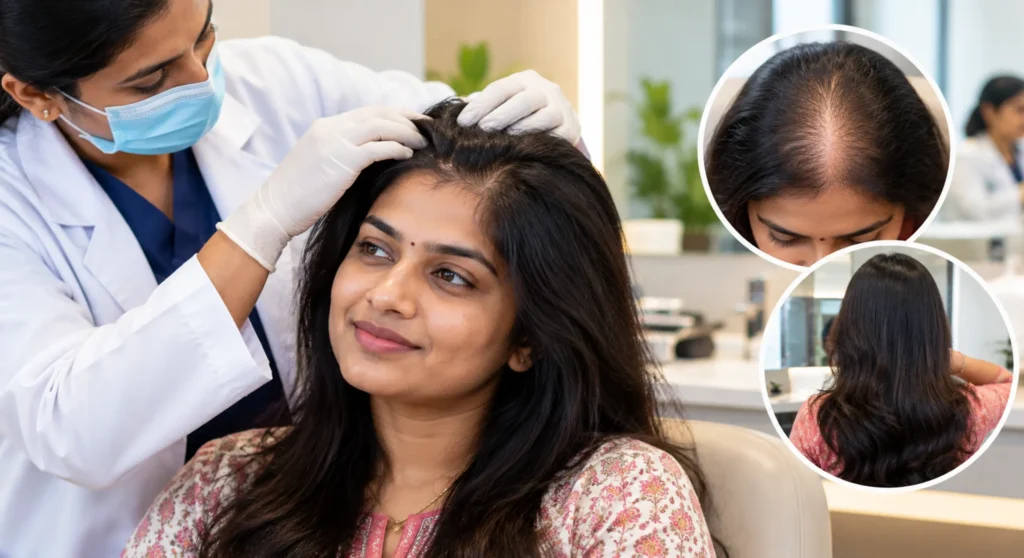
Thinning hair is hard on anyone, but women often face it quietly. A wider parting, a smaller ponytail, a hairline that has moved back a little: these changes are easy to hide for a while and hard to ignore once you notice them. Many women spend years trying shampoos, serums, and supplements before asking whether a female hair transplant could help. The honest answer is that it can, for the right person. A female hair transplant isn’t a first step, and it isn’t suitable for every woman with thinning hair. But when the cause has been identified and the donor hair is healthy, it can restore density in a way that medicines alone sometimes can’t. At Keva Aesthetic Clinic in R.S. Puram, we see women from Gandhipuram, Peelamedu, and across Coimbatore who want a straight answer about whether a transplant is right for them, what it involves, and what it costs. This guide covers all three. What Is a Female Hair Transplant? A hair transplant moves healthy hair follicles from a donor area, usually the back or sides of the scalp where hair tends to be more resistant to thinning, to the areas where hair has become sparse. Once the transplanted follicles settle in, they continue to grow hair in their new location. For women, the goal is rarely a dramatic change. It’s usually to rebuild density at the parting or crown, soften a high or receding hairline, or fill areas thinned by traction or scarring, in a way that looks completely natural. Why Women Lose Hair, and Why It Looks Different From Men’s Hair Loss Women’s hair loss tends to follow different patterns: Overall thinning across the top of the scalp, with a widening parting Reduced density at the crown A hairline that has gradually moved back or become thinner Thinning at the temples or hairline from long-term tight hairstyles Patches where hair was lost after scarring from injury, burns, or earlier surgery Behind these patterns are causes such as inherited female pattern hair loss, hormonal changes (including PCOS, thyroid problems, pregnancy, and menopause), nutritional gaps, stress, and scalp conditions. Because the causes differ so much, the first step is always finding out which one applies to you. Is a Female Hair Transplant Right for You? You may be a good candidate if: Your hair loss is stable, or under control with treatment You have healthy, dense donor hair Your thinning is concentrated in specific areas such as the parting, hairline, or crown, or comes from traction or scarring Any underlying medical or nutritional cause has been identified and addressed Your expectations about timing and results are realistic A transplant may not be the right option, at least not yet, if: Thinning is widespread and the donor area is thin as well The cause hasn’t been identified, or hair loss is still actively progressing There is an active scalp or inflammatory condition that needs treating first You are hoping for a result that the available donor hair can’t deliver An honest assessment sometimes means telling a patient to wait, or to start with medical treatment first. That is part of doing this properly. Why Diagnosis Comes Before Surgery A proper consultation starts with your history and a scalp examination. Digital trichoscopy lets the doctor measure hair density and follicle health in both the thinning area and the donor area, which shows how much a transplant can realistically achieve. Blood tests, for example for thyroid function, iron, or vitamin levels, are advised where your history points to them. This matters because a transplant moves hair, but it doesn’t change the reason your hair was thinning. Transplanted hair is generally expected to last, while the natural hair around it can keep thinning if the cause isn’t treated. That is why medical treatment often continues alongside, or after, a transplant. FUE and DHI: Technique Options for Women Two techniques are commonly used: FUE (Follicular Unit Extraction): Individual follicles are extracted from the donor area, small channels are made in the recipient area, and the grafts are placed into them. DHI (Direct Hair Implantation): Follicles are extracted in the same way, then implanted using a pen-like implanter that places each graft directly, with close control over angle, direction, and depth. Which one suits you depends on the area being treated, the number of grafts needed, your hair characteristics, and your goals. Many women also ask whether the whole head has to be shaved. That depends on the technique, the area being treated, and the clinic’s approach, and some women can have the procedure with limited shaving. It is worth asking about at your consultation. What Happens on the Day of the Procedure Planning and design. Your doctor confirms the treatment area and plans the hairline or parting design to suit your face and existing hair. Comfort first. The procedure is done under local anaesthesia, so you stay awake but comfortable. Graft extraction. Healthy follicles are carefully taken from the donor area. Implantation. The grafts are placed in the treatment area at a natural angle and direction, matching the growth pattern of your existing hair. Aftercare instructions. Before you leave, you receive clear guidance on washing, protecting the scalp, medicines, and follow-up visits. Recovery and Results Timeline Everyone heals at their own pace, but this is a typical pattern: When What to expect First few days Mild redness, swelling, and tenderness, with small scabs at the graft sites. Follow your aftercare instructions closely. Around 1 to 2 weeks Scabs usually clear and the scalp settles. Most people return to normal routines as advised by the clinic. Weeks 2 to 8 Transplanted hairs often shed. This is a normal part of the hair cycle and does not mean the transplant has failed. Months 3 to 4 New growth begins, often fine at first. Months 6 to 9 Hair gradually thickens and density improves. Around 12 months, sometimes longer Results approach their final look. Female Hair Transplant Cost in India: What Decides the Price There