
Best Hair Treatment in Coimbatore for Women: Hair Care by Life Stage, from Regrowth to Female Hair Transplant
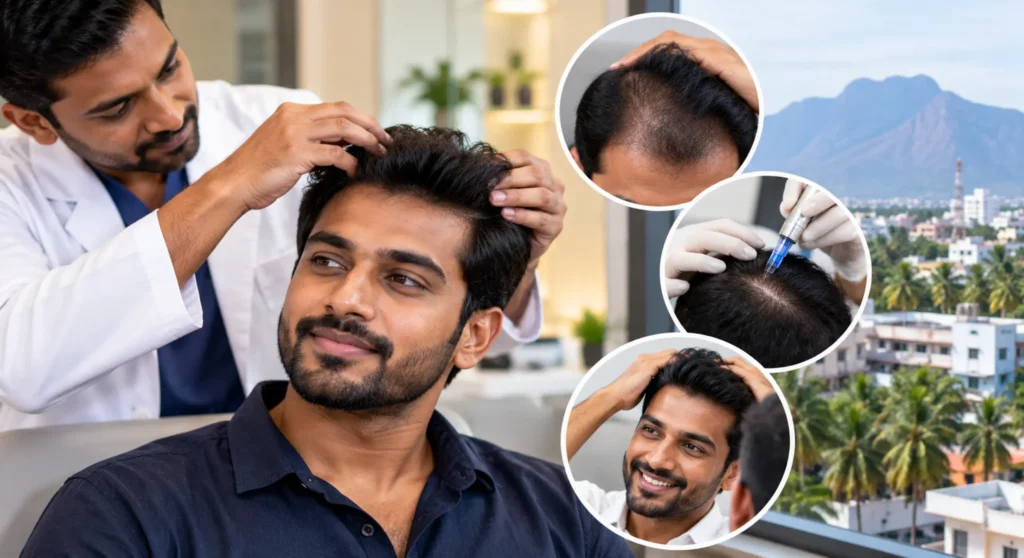
Hair, Skin & Body Specialists Serving Gandhipuram, Peelamedu & R.S. Puram, Coimbatore Ask ten women what the best hair treatment is and you will get ten different answers, because a woman’s hair changes with her life. What helps a college student with stress shedding is not what helps a new mother, and neither matches what suits someone dealing with hormonal thinning in her forties. This guide walks through hair care by life stage, so you can see where your own situation fits before you search for hair treatment near me. It comes from the team at Keva Aesthetic Clinic in R.S. Puram, also known to patients as Keva Clinic – Hair Skin Body. Why There Is No Single Best Hair Treatment The best hair treatment in Coimbatore for you depends on why your hair is changing. Women’s hair loss is usually diffuse, meaning it thins across the scalp rather than forming a receding hairline, and it has many possible causes: hormones, nutrition, stress, scalp conditions, tight hairstyles, and genetics. A proper assessment comes first, because treating the wrong cause wastes months. Hair Care by Life Stage In Your Teens and Twenties Shedding at this age is often linked to stress, crash diets, nutritional gaps, or scalp problems such as dandruff and excess oil. Good hair care here is mostly about the basics: scalp health, balanced nutrition, and gentle styling. Persistent or worsening thinning deserves a check rather than guesswork, since hormonal conditions can start early. Pregnancy and After Delivery Many women notice heavy shedding some months after childbirth. This is a common, usually temporary pattern, but it can feel alarming. A clinician can confirm whether your shedding fits that pattern or needs further evaluation, and advise on gentle care while the hair cycle settles. Hormonal Changes Conditions such as PCOS and thyroid imbalance can affect hair, and so can menopause. Because the root cause is medical, hair treatment works best alongside proper medical evaluation. We assess the hair and scalp, and where a hormonal cause is suspected we encourage you to follow it up with your physician. Long-Term Styling Stress Tight ponytails, braids, and extensions can cause traction hair loss along the hairline and parting. Caught early, this can recover once tension is reduced. Long-standing cases may leave areas that need other treatment. The Treatment Options, in Order of Invasiveness Scalp treatment: Treating dandruff, excess oil, or inflammation so follicles can recover. Often the first step. Diagnosis and cause-finding: Trichoscopy and, where relevant, medical evaluation to find the cause before any procedure. Hair regrowth treatment: PRP and GFC therapy use growth factors from your own blood to stimulate weakened follicles, and tend to suit early to moderate thinning with active follicles. Female hair transplant: For stable, well-defined areas of loss with enough donor hair, a transplant may be considered. A good clinic recommends the least invasive option that genuinely fits your case, and tells you plainly when something more is needed. Female Hair Transplant: What Women Should Know A female hair transplant is planned differently from a male one, because female hair loss is typically diffuse and the donor area must be assessed carefully. It tends to suit women with stable loss, traction or scarring-related loss, or a defined thinning zone, and enough healthy donor hair. It is not a first step for every woman, and some patients are better served by regrowth treatment or by treating an underlying condition first. Female Hair Transplant Cost in India: What Affects It Women often search for female hair transplant cost in India before anything else, but the figure depends on the individual. These factors usually decide it: Extent of loss: Wider or denser thinning needs more grafts Donor planning: Diffuse patterns need careful donor assessment and planning Precision required: Natural blending into existing hair takes time and precision Specialist experience: Experience with female cases specifically, not only male transplants Because of this, a reliable cost is given only after an in-person assessment. We explain the reasoning behind your estimate so you know what you are paying for. Finding a Hair Treatment Doctor Near Me: What to Ask Will my scalp and hair actually be examined before a plan is suggested? Are non-surgical options discussed before a transplant is recommended? Is the cost explained clearly after assessment? Is follow-up built into the plan? These questions help any patient, and they matter especially for women, whose causes of hair loss are often more varied. Hair and Skin Care Under One Roof Hair and scalp health are closely linked to skin health, which is why patients know the clinic by several names: Keva Aesthetic Clinic, Keva Hair and Skin Care, Keva Skin Clinic, Keva Hair Clinic, Keva Coimbatore, or Keva Hair Care Clinic. It is one clinic. Looking at hair and skin together lets us spot scalp conditions that quietly hold hair back. Why Location Matters Hair treatment runs over months, with regular reviews. Keva Aesthetic Clinic is in R.S. Puram, within about 5 kilometres of Gandhipuram and Peelamedu, so follow-up fits into normal life for women across all three areas. Why Choose Keva Aesthetic Clinic for Hair Care Diagnosis First: Hair and scalp assessed before any treatment is suggested Life-Stage Awareness: Treatment matched to the cause and stage of your hair loss Transparent Pricing: Costs explained after an in-person assessment Full Range of Options: Regrowth treatment and transplantation under one roof Conveniently Located: Serving Gandhipuram, Peelamedu, R.S. Puram, and nearby areas Keva Aesthetic Clinic (Keva Hair Care Clinic) 3rd Floor, Harmony Complex, No 424K, Diwan Bahadur Rd, above ICICI Bank, above Pandiyan Medicals, R.S. Puram, Coimbatore, Tamil Nadu 641002 Phone: +91 95855 25905 Email: info@kevahaircare.com Website: kevahaircare.com Hair care that follows your life, not a one-size-fits-all plan. Book your consultation at Keva Aesthetic Clinic, Coimbatore today. Book Your Consultation at Keva Hair Care Today! Tired of dull, lifeless, frizzy hair? Let Keva Hair Care Clinic, the best hair clinic Coimbatore, transform your hair and your confidence. 📍 Visit us at:Keva Hair Care Clinic,
Hair Care in Coimbatore: From Everyday Routine to Expert Treatment at the Best Hair Clinic
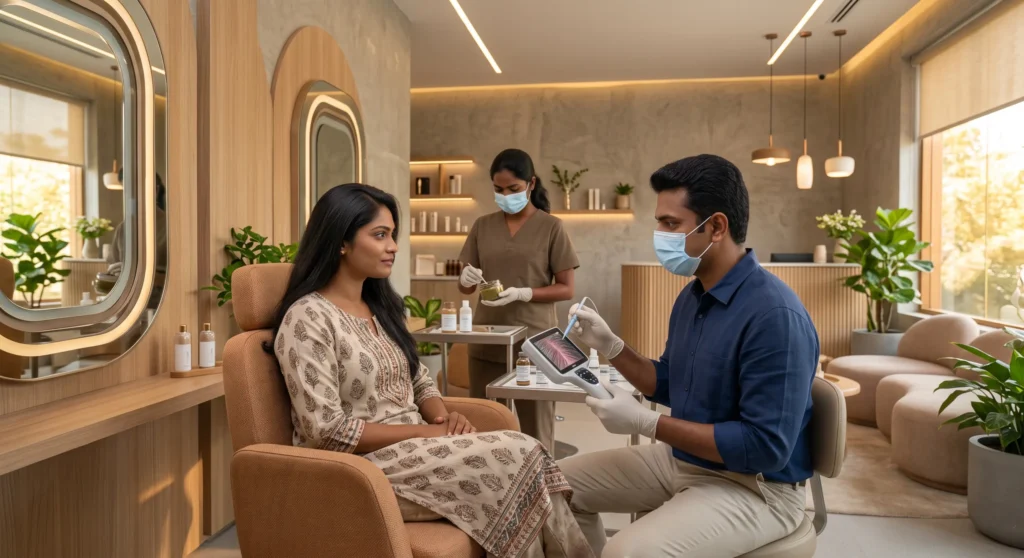
By the Trichology & Hair Care Team, Keva Aesthetic Clinic, Coimbatore Good hair care starts at home, but it doesn’t always end there. Most of us wash, oil, condition, and style our hair without thinking much about it, until the day we notice more strands in the comb, a scalp that won’t stop itching, or a parting that looks wider than it used to. That’s usually when the search begins: hair treatment near me, best hair treatment in Coimbatore, hair treatment doctor near me. At Keva Aesthetic Clinic in R.S. Puram, we meet patients at every stage of that journey, from people who just want to know whether their routine is right, to those who need a proper diagnosis or a hair transplant. This guide covers what sound hair care actually looks like in Coimbatore’s climate, the signs that it’s time to see an expert, and what women in particular should know about hair loss and female hair transplant options. What Good Hair Care Actually Looks Like Hair care doesn’t need a ten-step routine. It needs a handful of habits done consistently: Wash to suit your scalp, not a rule. Oily scalps often need washing more frequently than dry ones. Leaving sebum, sweat, and dust sitting on the scalp for days encourages buildup around the follicle. Use a gentle, scalp-appropriate shampoo. Harsh, stripping formulas can push the scalp to produce even more oil in response. Treat the scalp as skin. Healthy hair grows from a healthy scalp, so massage, cleanse, and protect it, not just the lengths of your hair. Go easy on heat and tight styles. Frequent blow-drying, straightening, and tight ponytails or braids put strain on the hair shaft and the follicle. Eat and sleep for your hair. Protein, iron, and other nutrients all play a role in hair growth, and crash diets or chronic poor sleep often show up in the hairbrush a few months later. Protect your hair from the environment. Coimbatore’s warm, humid weather increases sweating and oil production, and urban dust and pollution settle on the scalp. Rinsing off after heavy sweating or long commutes helps. Common Hair Care Mistakes We See in Clinic Patients who walk in for hair treatment in Coimbatore often mention the same habits: Switching shampoos and serums every few weeks, never giving any one routine time to show results Applying heavy oils and styling products on top of an already oily or flaky scalp Scrubbing aggressively to “remove dandruff” when the problem is actually buildup or inflammation Following social media hair remedies without knowing the actual cause of hair loss Waiting too long, assuming hair fall will “settle down on its own” None of these are unusual, and most are easy to correct once the real cause is identified. When Home Hair Care Isn’t Enough Some changes are worth getting checked rather than managed at home. Consider booking a consultation with a hair treatment doctor near you if you notice: Hair fall that continues for more than two to three months Visible thinning at the parting, crown, or temples A persistently itchy, tender, or flaky scalp Small bumps or redness on the scalp Hair that feels weaker, thinner, or breaks easily despite good care Sudden or patchy hair loss A proper evaluation looks at the scalp and follicles themselves, often using digital trichoscopy, rather than guessing from the outside. That’s what separates the best hair treatment from a trial-and-error approach. Hair Care for Women: Why Female Hair Loss Needs Its Own Approach Women’s hair loss is often different from men’s. Instead of a receding hairline, it commonly appears as overall thinning, a widening parting, or reduced volume across the scalp. Common contributing factors include: Hormonal changes, including PCOS, thyroid imbalance, pregnancy, and menopause Nutritional gaps such as low iron or protein intake Post-partum shedding Stress and illness Traction from tight hairstyles Inherited female pattern hair loss Because the causes vary so much, a good consultation often starts with history and examination, and in some cases blood tests, before any treatment is recommended. Many women find that addressing the underlying cause, along with a tailored hair regrowth plan, makes a significant difference without surgery. Female Hair Transplant: Is It an Option? For some women, hair loss stays stubborn despite proper treatment, or it affects a specific area such as the hairline, parting, or a region of scarring or traction damage. In these cases, female hair transplant may be worth discussing. A few things worth knowing: Candidacy matters. Transplants rely on healthy, stable donor hair, usually from the back or sides of the scalp. Women with widespread, active thinning may not be ideal candidates until the underlying cause is under control. Diagnosis comes first. Hormonal or nutritional causes are typically addressed before surgery is considered. Technique is chosen case by case. Methods such as FUE or DHI (Direct Hair Implantation) allow precise placement of grafts, and the right choice depends on the area being treated and the patient’s goals. Expectations should be realistic. Transplanted hair grows over several months, and results develop gradually rather than overnight. A transplant can be an excellent solution for the right patient, which is why an honest assessment matters more than the procedure itself. Female Hair Transplant Cost in India: What Affects It Patients searching for female hair transplant cost in India often find a very wide range of numbers, and that’s because the final cost depends on several factors: Number of grafts required, which depends on the area and the density you’re aiming for The technique used, such as FUE or DHI The extent of hair loss and the complexity of the hairline or parting design Whether other treatments (such as PRP or medical management) are part of the plan The clinic’s experience and facilities Because every scalp is different, a fair estimate can only come after a consultation and scalp analysis. We’d rather give you a realistic figure for your case than a generic number that doesn’t apply to you. What Makes the
Is Hair Regrowth Treatment Your Best Hair Treatment Option? A Self-Assessment Guide
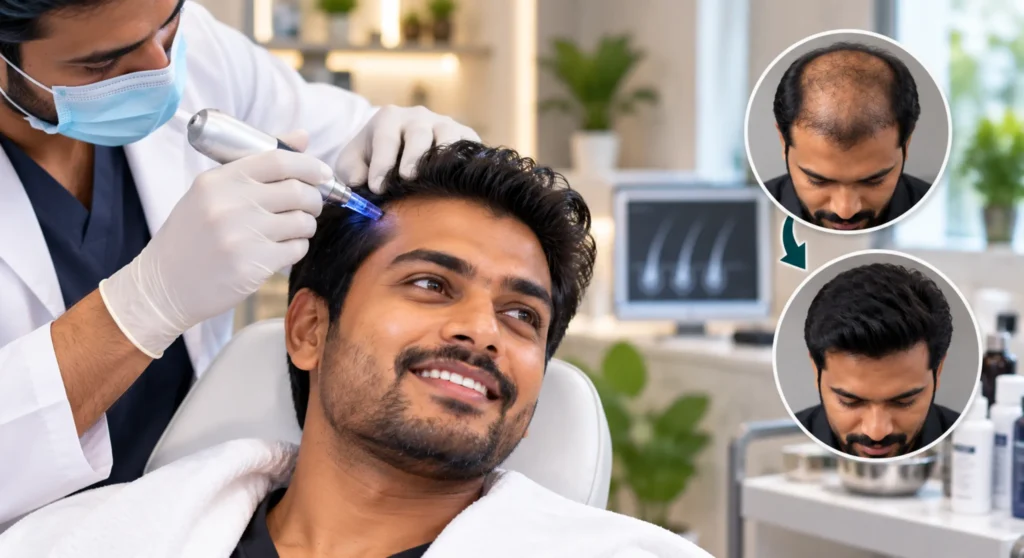
Trusted Hair & Scalp Specialists Serving Gandhipuram, Peelamedu & R.S. Puram, Coimbatore Most articles about the best hair treatment jump straight into listing services. This one works differently. Before recommending anything, we want to help you figure out where you actually stand, because hair regrowth treatment is genuinely excellent for some patients and genuinely the wrong first step for others. At Keva Hair Care Clinic, serving Gandhipuram, Peelamedu, and R.S. Puram, we built this as a self-assessment guide so you can walk into a consultation already understanding roughly where you fall, rather than starting from zero. Step 1: Check Which of These Describes Your Hair Loss Before anything else, be honest with yourself about which of these sounds closest to your situation: Pattern A: You’re noticing more hair in the shower drain or on your pillow, but your scalp isn’t visibly showing through yet Pattern B: Your parting looks wider than it used to, or your scalp is visible under certain lighting, but you still have fine, thin hair covering the area Pattern C: There’s a clearly defined patch or area where no hair is growing at all, and it’s been that way for months without change Pattern D: Your hairline has receded into a defined shape (like an M-shape or deepening temples) rather than thinning evenly Pattern A and Pattern B are generally where hair regrowth treatment has the strongest track record. Pattern C, complete bald patches with no fine hair present, usually signals dormant follicles, where regrowth treatment alone is less likely to be enough. Pattern D can go either way depending on how far the recession has progressed, which is exactly the kind of judgment call a trichoscopy is built for. Step 2: Understand What Hair Regrowth Treatment Can Realistically Do If you land in Pattern A or B, here’s what non-surgical hair regrowth treatment is actually working with, and what it isn’t: What it works on: Follicles that have shrunk or weakened but haven’t gone completely dormant. Regrowth treatment stimulates these back toward a healthier growth cycle. What it can’t do: It can’t generate entirely new follicles where none currently exist, and it can’t instantly reverse years of progressive thinning in a single session. Realistic timeline: Most patients see meaningful change over 4 to 6 months, not weeks, since hair growth cycles simply move at that pace regardless of treatment type. Step 3: Compare the Main Non-Surgical Options Assuming regrowth treatment is a reasonable fit for your pattern, here’s how the commonly recommended options generally differ: PRP (Platelet-Rich Plasma) Therapy Uses a concentrated portion of your own blood, rich in platelets and growth factors, injected into thinning areas. One of the more established, widely practised regrowth options, typically requiring 4 to 6 sessions for a full course. GFC (Growth Factor Concentrate) Therapy A more refined, cell-free concentration of growth factors, offering a similar regenerative effect to PRP with a smoother preparation process. Often considered by patients seeking a slightly different formulation. Medicated Scalp Therapy For cases where thinning is linked to an underlying scalp condition, such as dandruff-related inflammation or follicle-blocking buildup, addressing the scalp issue directly is sometimes the necessary first step before regrowth treatment can be fully effective. Which of these fits best depends on your scalp assessment, not personal preference alone, since PRP and GFC respond differently depending on your specific follicle condition. Step 4: Know the Warning Signs That Regrowth Treatment Isn’t Enough Even patients who start with regrowth treatment should watch for these signals that a different approach may be needed: No visible improvement after a full recommended course of sessions (typically 4 to 6), assessed properly rather than judged too early The affected area has progressed from thinning to a fully bald patch during the treatment period Your trichologist’s follow-up assessment shows minimal follicle response despite consistent sessions If any of these apply, it’s not a sign the treatment failed you; it’s simply a sign your case has moved into territory where hair transplantation (FUE or DHI) becomes the more realistic path forward. Finding the Right Support Near You Wherever you land in this self-assessment, the next step is the same: a proper, in-person trichoscopy, not a guess based on symptoms alone. Patients searching for hair treatment near me or hair care near me across Gandhipuram, Peelamedu, and R.S. Puram can reach Keva Hair Care Clinic in R.S. Puram within a short, convenient distance, which matters given that regrowth treatment involves multiple follow-up sessions over several months. If you’re specifically looking for a hair treatment doctor near me who will actually walk you through which pattern you fall into, rather than upselling the same package to every patient, that diagnostic honesty is exactly what we built our consultation process around. Why Choose Keva Hair Care Clinic for Your Hair Assessment Diagnosis Before Treatment: A proper trichoscopy to place your hair loss into the right pattern, before recommending anything Honest Treatment Comparisons: Clear, unbiased comparisons between PRP, GFC, and other paths based on your case specifically Structured Session Tracking: Progress genuinely reviewed at each follow-up, not assumed Clear Next Steps If Needed: A clear escalation path to transplantation if regrowth treatment isn’t the right long-term fit Conveniently Located: Serving patients across Gandhipuram, Peelamedu, R.S. Puram, and nearby areas Book Your Hair Assessment at Keva Hair Care Clinic Today Whether your self-assessment points toward hair regrowth treatment, or you suspect you may need something beyond it, the team at Keva Hair Care Clinic is here to confirm exactly where you stand with an honest, diagnosis-first consultation. Keva Hair Care Clinic 3rd Floor, Harmony Complex, No 424K, Diwan Bahadur Rd, above ICICI Bank, above Pandiyan Medicals, R.S. Puram, Coimbatore, Tamil Nadu 641002 Phone: +91 95855 25905 Email: info@kevahaircare.com Website: kevahaircare.com Trusted Hair & Scalp Specialists Serving Gandhipuram, Peelamedu & R.S. Puram, Coimbatore Know where you stand before you commit to anything. Book your consultation with the specialists at Keva Hair Care Clinic, Coimbatore today. Book Your Consultation at Keva Hair Care Today!
Hair Care Tips for Different Seasons
Hair Care Tips for Different Seasons Hair care needs vary with the changing seasons, as each season brings its own set of challenges. From the dry, cold air of winter to the humid, sunny days of summer, understanding how to adapt your hair care routine can make a significant difference in maintaining healthy, beautiful hair year-round. At Keva Hair Care in Coimbatore, we provide expert advice and tailored treatments to help you keep your hair in top condition regardless of the season. Here are some essential hair care tips for different seasons and treatments. Winter Hair Care Tips Winter can be particularly harsh on your hair due to the cold, dry air and indoor heating, which can strip moisture from your strands and blowouts at home. Hydrate and Moisturize: Use a deep conditioning treatment once a week to replenish moisture. Opt for a hydrating shampoo and conditioner that contains ingredients like shea butter, argan oil, and glycerin. Avoid Hot Water: Wash your hair with lukewarm water instead of hot water to prevent stripping natural oils from your scalp and hair. Limit Heat Styling: Reduce the use of heat styling tools like blow dryers, straighteners, and curling irons to prevent further drying out your hair. Protect Your Hair: Wear a hat or scarf to shield your hair from the cold wind and prevent breakage. Control Static: Use a leave-in conditioner or anti-static spray to tame static and frizz caused by dry air. Spring Hair Care Tips Spring is a time of renewal and hair growth, making it an excellent opportunity to repair any winter damage and prepare for the warmer months. Clarify and Detox: Use a clarifying shampoo once a month to remove any buildup from winter products and refresh your scalp. Trim and Nourish: Get a trim to get rid of split ends and promote healthy growth. Incorporate a lightweight, nourishing conditioner to keep your hair hydrated without weighing it down. Manage Humidity: As the weather warms up, switch to frizz-control products that help manage humidity and keep your hair smooth. UV Protection: Start using hair products with UV protection to shield your hair from the increasing sun exposure. Balanced Diet: Eat a balanced diet rich in vitamins and minerals to support healthy hair growth during this period of renewal. Summer Hair Care Tips Summer brings sun, heat, and humidity, which can lead to dry, brittle hair if not properly managed. Hydrate and Protect: Use a moisturizing shampoo and conditioner to combat dryness. Apply a leave-in conditioner or hair serum with UV protection to protect your hair from sun damage. Limit Sun Exposure: Wear a hat or use a scarf to cover your hair when spending extended periods in the sun. Rinse After Swimming: Rinse your hair with fresh water after swimming in chlorinated or salt water to prevent dryness and damage. Reduce Heat Styling: Embrace natural hairstyles and reduce the use of heat styling tools to minimize further damage from the sun and heat. Stay Hydrated: Drink plenty of water to keep your body and hair hydrated from the inside out. Autumn Hair Care Tips Autumn is a transitional season where you need to repair summer damage and prepare for the upcoming winter. Repair and Restore: Use a deep conditioning treatment to repair any damage from the summer sun, salt, and chlorine. Incorporate protein hair treatments to strengthen and restore your hair. Reduce Hair Fall: Hair tends to shed more in the fall. Use gentle, nourishing shampoos and conditioners to reduce breakage and hair fall. Moisturize: As the weather cools down, start using richer, more moisturizing hair products to combat the drying effects of the cold air. Scalp Care: Pay attention to your scalp health. Use a scalp scrub or treatment to keep your scalp clean and free from buildup. Protect Against Wind: Wear protective styles or use hair accessories to shield your hair from the harsh autumn winds. Frequently Asked Questions How often should I change my hair care routine with the seasons? It’s a good idea to evaluate and adjust your hair care routine at the start of each season to address the specific challenges each one brings. Can I use the same shampoo and conditioner year-round? While you can use the same basic products, consider adding seasonal treatments like deep conditioners, UV protectants, or clarifying shampoos to address specific needs. How can I prevent hair damage from sun exposure in the summer? Use hair products with UV protection, wear a hat, and apply a leave-in conditioner or hair serum to shield your hair from the sun. What is the best way to combat frizz in humid weather? Use anti-frizz products, avoid over-washing your hair, and incorporate a leave-in conditioner or serum to keep your hair smooth and manageable. How do I deal with static hair in the winter? Use a hydrating shampoo and conditioner, apply a leave-in conditioner or anti-static spray, and avoid synthetic materials that can increase static. Is it necessary to get a haircut at the beginning of each season? Regular trims every 6-8 weeks can help maintain healthy hair and remove split ends, making it beneficial to get a trim at the start of each season. How can I keep my hair moisturized during the dry winter months? Use a deep conditioning treatment weekly, switch to a moisturizing shampoo and conditioner, and avoid washing your hair with hot water. Can diet affect my hair health? Yes, a balanced diet rich in vitamins and minerals supports healthy hair growth. Include foods high in omega-3 fatty acids, vitamins A, C, and E, and protein for optimal hair health. What should I do if my hair becomes brittle in the summer? Use a moisturizing shampoo and conditioner, limit heat styling, and apply a hydrating hair mask or deep conditioner regularly to restore moisture. How can I protect my hair from wind damage in the autumn? Wear protective hairstyles, use hair accessories like scarves and hats, and apply leave-in conditioners or serums to shield your hair