DHI Hair Transplant in Coimbatore: A Complete Guide to the Direct Hair Implantation Technique
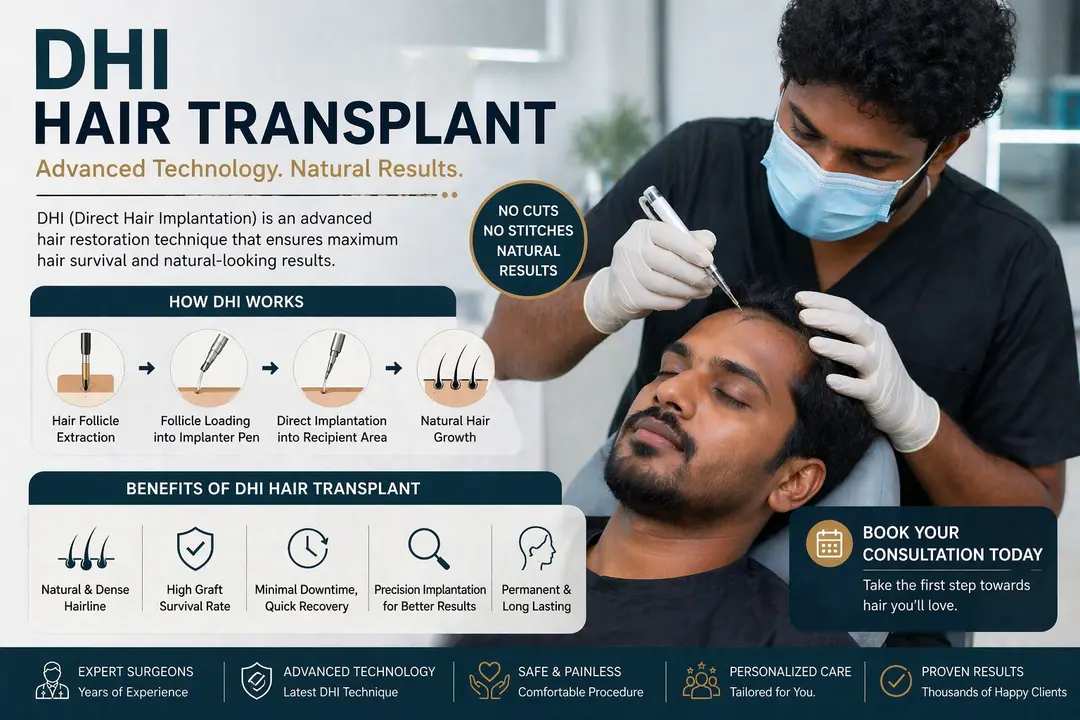
If you’ve been researching ways to restore a receding hairline or thinning crown, chances are you’ve come across the term DHI hair transplant more than once. It’s one of the most talked-about hair restoration techniques today, known for its precision and natural-looking results. But what does it actually involve, how is it different from other methods, and is it the right choice for you? At Keva Hair Care Clinic, Coimbatore, our hair transplantation specialists break down everything you need to know before you book a consultation.
What Is DHI Hair Transplant?
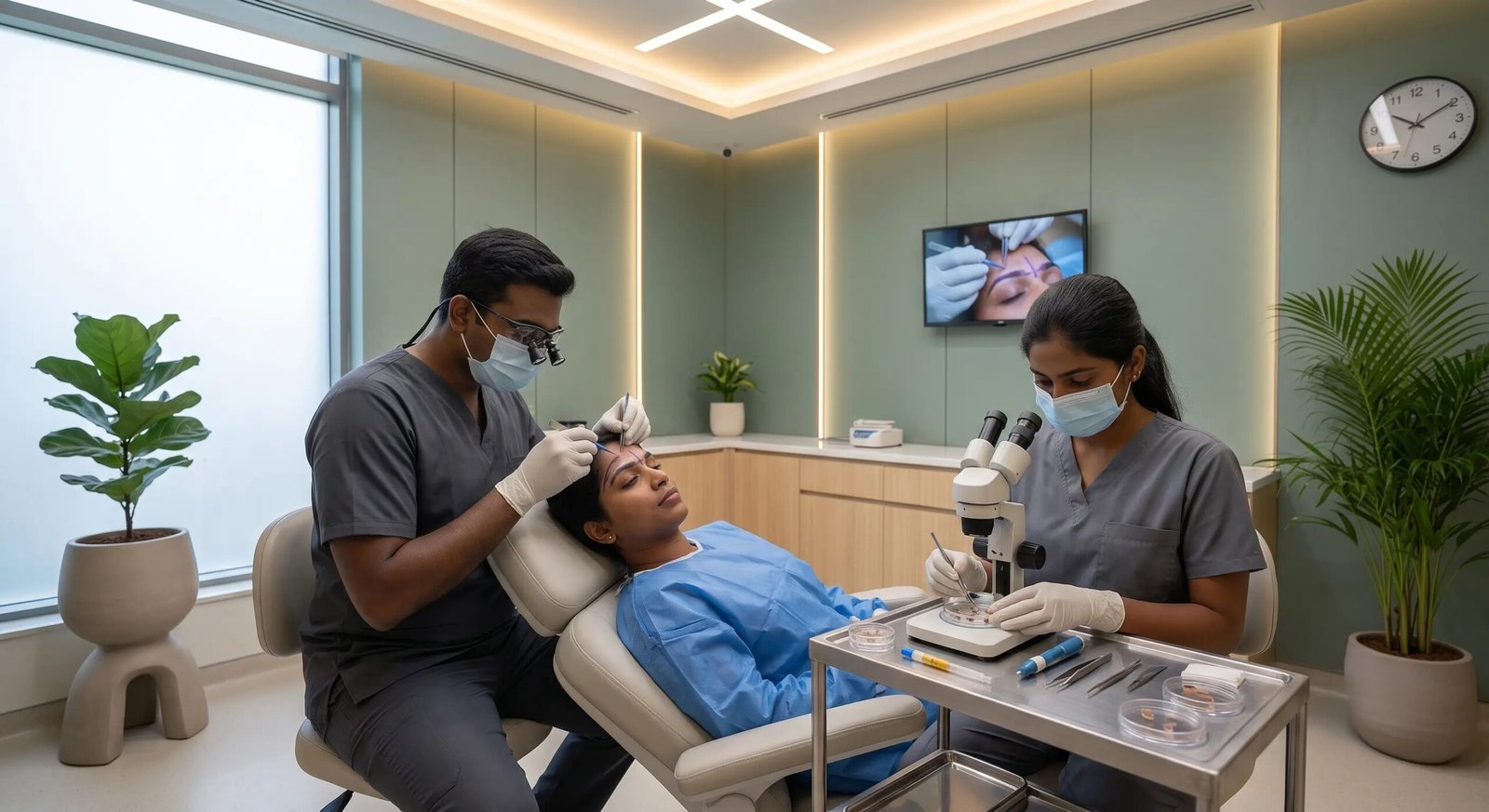
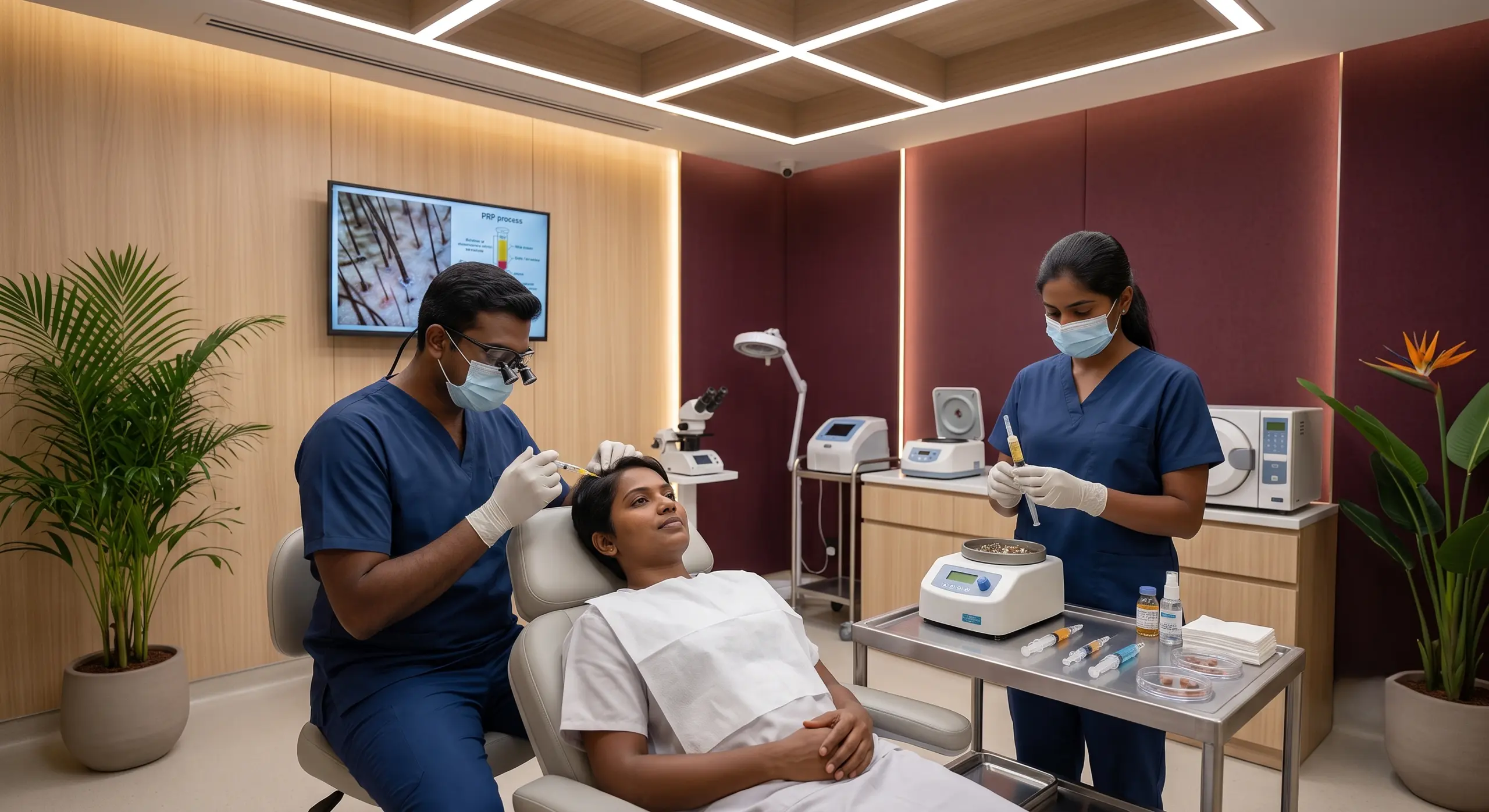
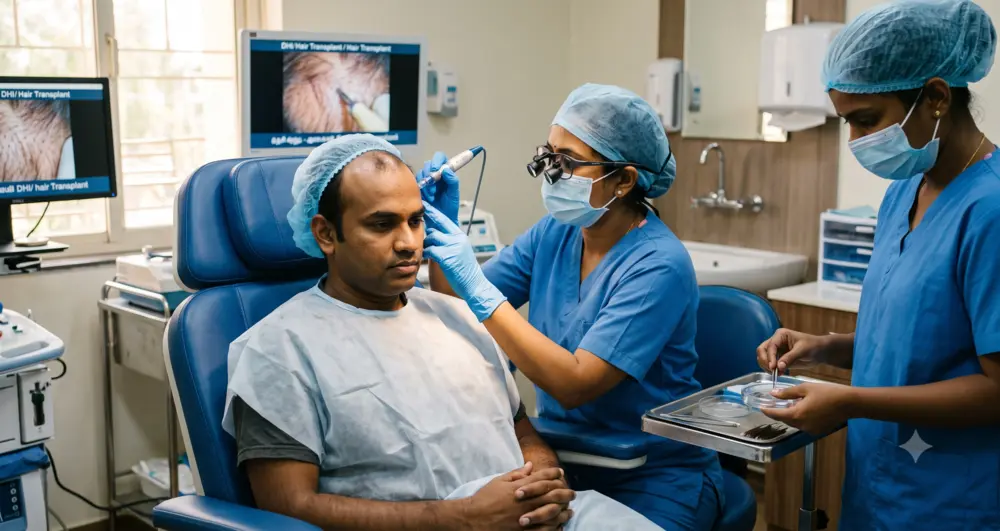
DHI stands for Direct Hair Implantation, an advanced, refined version of the follicular unit extraction process. Unlike traditional methods where incisions are made in the recipient area before implantation, direct hair implantation uses a specialised pen-like tool called a Choi Implanter to extract and implant hair follicles in a single, continuous step.
This means the follicle is removed from the donor area (usually the back of the scalp, where hair is genetically resistant to thinning) and placed directly into the recipient area without the need for pre-made incisions or slits. The result is a technique that allows for tighter control over the angle, depth, and direction of each implanted follicle, which is exactly why the DHI technique hair transplant has gained popularity among patients seeking dense, natural-looking regrowth.
How Does the DHI Technique Hair Transplant Actually Work?
At Keva Hair Care Clinic, every DHI procedure follows a structured, step-by-step protocol:
Step 1: Consultation & Scalp Assessment
Before any procedure, our specialists conduct a detailed trichoscopic evaluation to assess your donor hair density, degree of hair loss, scalp condition, and overall candidacy for a transplant. This is also when we discuss realistic expectations and design a hairline suited to your face shape.
Step 2: Donor Hair Extraction
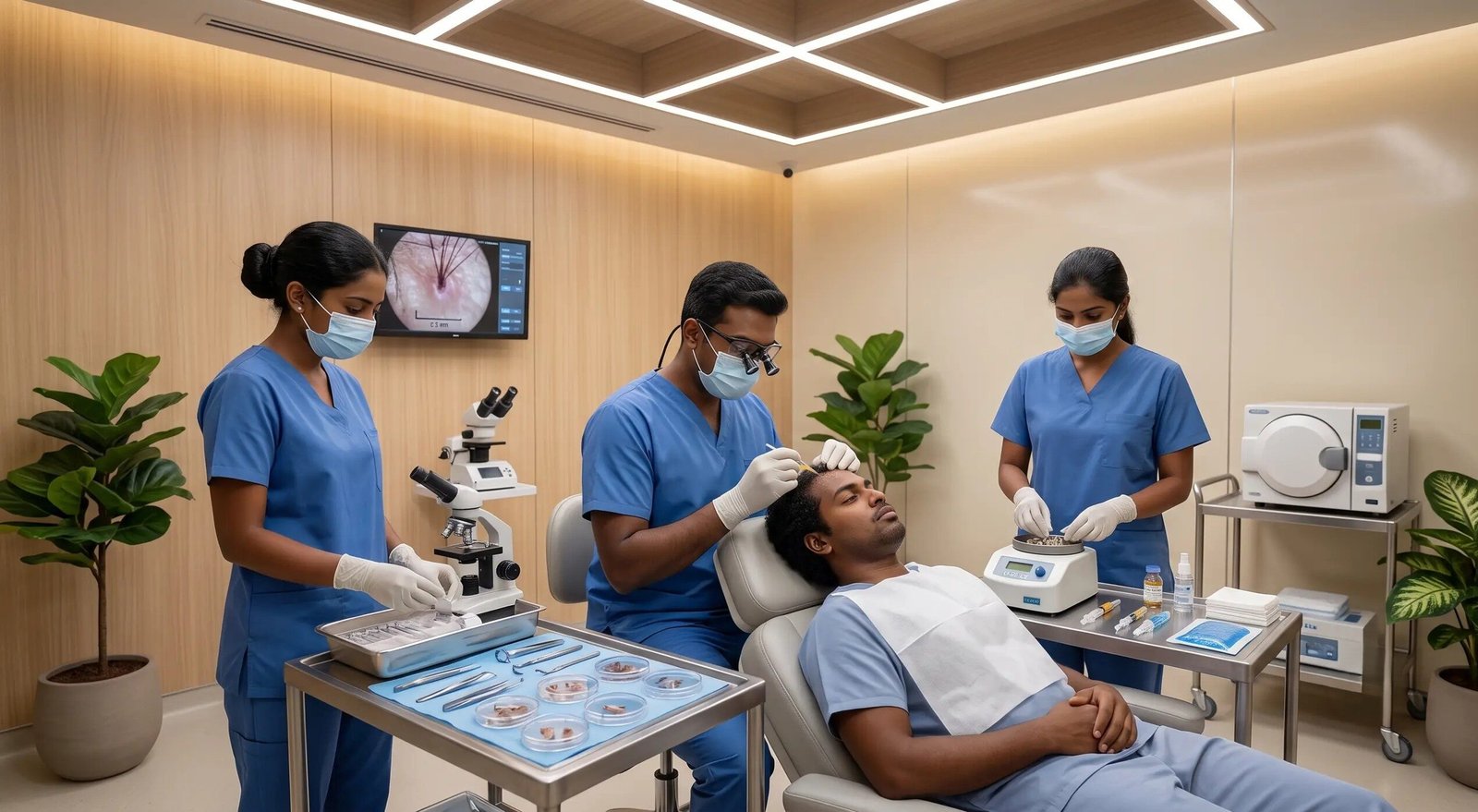
Individual hair follicles are carefully extracted from the donor area using a fine, hollow punch tool, ensuring minimal trauma to the surrounding tissue and a faster healing process.
Step 3: Direct Implantation with the Choi Pen
This is where direct hair implantation stands apart. Each extracted follicle is loaded into the Choi Implanter Pen and placed directly into the scalp at the desired angle, depth, and direction, all in a single motion. There is no need to create separate recipient site incisions beforehand, which allows for higher graft survival rates and tighter, more natural-looking hair density.
Step 4: Recovery & Aftercare
Following the procedure, patients receive a personalised aftercare and homecare plan, along with a follow-up schedule to monitor healing and hair regrowth over the following months.
FUE vs DHI Hair Transplant: What’s the Real Difference?
One of the most common questions we get at our clinic is about FUE vs DHI hair transplant, and understandably so, both techniques extract follicular units individually rather than in a strip, but they differ in a few important ways:
- FUE (Follicular Unit Extraction): Follicles are extracted and then implanted into pre-made incisions or slits created separately by the surgical team. This method typically allows for slightly faster extraction and is well suited for larger sessions requiring extensive graft numbers.
- DHI (Direct Hair Implantation): Follicles are extracted and implanted directly using the Choi pen, without pre-made incisions. This generally allows more precise control over angle and direction, often resulting in a more natural hairline design, and tends to involve a shorter out-of-scalp time for grafts, which can support graft survival.
In practice, DHI is often preferred for hairline design and areas requiring high precision, while FUE may be chosen for larger sessions where speed and graft volume are the priority. Neither is universally superior, the right technique depends on your hair loss pattern, donor availability, and aesthetic goals, which is why a proper consultation matters more than following trends.
Why Are More Patients Choosing DHI Hair Transplant in India?
Over the past few years, DHI hair transplant India searches have grown steadily, and for good reason. Indian clinics, including those in cities like Coimbatore, now offer the same globally recognised DHI protocols and equipment used in leading international hair restoration centres, but at a fraction of the cost compared to clinics abroad.
A few reasons patients across India, and increasingly from other countries, are opting for DHI India include:
- Highly skilled trichologists and hair transplant surgeons with international training
- Access to advanced tools like the Choi Implanter Pen at accredited clinics
- Significantly lower treatment costs without compromising on technique or safety
- Growing awareness and demand pushing clinics to adopt updated, evidence-based protocols
At Keva Hair Care Clinic, we’ve built our hair transplantation clinic in Coimbatore, Tamil Nadu around these same standards, so patients don’t have to travel far or pay a premium to access quality DHI hair transplant care.
Who Is a Good Candidate for Direct Hair Implantation?
Not everyone with hair thinning is an immediate candidate for a transplant, and not every candidate is automatically suited to DHI specifically. Generally, good candidates include:
- Patients with sufficient donor hair density at the back or sides of the scalp
- Individuals with stable, non-progressive hair loss patterns (often confirmed through trichoscopy)
- Patients seeking precise hairline design or filling in smaller, more defined areas of thinning
- Those who want a technique with typically less visible scarring and a comparatively quicker recovery window
If you’re unsure whether you fall into this category, a detailed scalp assessment at our clinic can clarify whether DHI, FUE, or a combination approach is the right path for you.
What to Expect After Your DHI Hair Transplant
Recovery timelines vary from person to person, but most patients can expect the following general pattern after a DHI hair transplant:
- Mild redness and tiny scabbing at implantation sites, which typically settle within a week to ten days
- Transplanted hair often sheds within the first 3-4 weeks, which is a normal part of the process before regrowth begins
- Noticeable new growth generally starts appearing around month 3 to 4
- Fuller, more textured results are usually visible between month 8 and 12
Our team provides a structured follow-up plan after every procedure, so you’re never left guessing whether your recovery is on track.
Choosing the Right Hair Transplantation Clinic in Coimbatore
With so many hair transplant clinics near me showing up in every online search, it’s worth being selective. Before committing to a clinic for your DHI hair transplant, consider checking:
- Whether the clinic uses proper trichoscopic evaluation before recommending a technique
- Transparency about graft numbers, technique used, and realistic result timelines
- Hygiene protocols and the use of medical-grade tools like the Choi Implanter Pen
- A genuine aftercare and follow-up system, not just a one-time procedure
At Keva Hair Care Clinic, our hair transplantation clinic in Coimbatore, Tamil Nadu follows a consultation-first approach, ensuring every patient understands their options, including DHI, FUE, or non-surgical alternatives, before any procedure is scheduled.
Book Your DHI Hair Transplant Consultation Today
Whether you’re exploring DHI hair transplant for the first time, comparing FUE vs DHI hair transplant options, or simply want an honest assessment of your candidacy, the team at Keva Hair Care Clinic is here to guide you with a transparent, consultation-first approach.
Keva Hair Care Clinic
Phone: +91 95855 25905
Email: info@kevahaircare.com
Website: kevahaircare.com
Book Your Consultation at Keva Hair Care Today!
Tired of dull, lifeless, frizzy hair? Let Keva Hair Care Clinic, the best hair clinic Coimbatore, transform your hair and your confidence.
📍 Visit us at:
Keva Hair Care Clinic, 3rd Floor, Harmony Complex,
Diwan Bahadur Road, R.S. Puram, Coimbatore – 641002
(Above ICICI Bank & Pandiyan Medicals)
📞 Call Now: +91 95855 25905
🌐 Website: https://kevahaircare.com
📲 Book Online or Walk-In Today!
Why Choose Keva Hair Care Clinic for Your DHI Hair Transplant?
- Trichoscopy-Led Diagnosis: Detailed scalp and donor hair evaluation before recommending any technique
- Advanced DHI Protocols: Access to Choi Implanter Pen technology for precise direct hair implantation
- Experienced Specialists: Hairline design and technique selection tailored to your face shape and goals
- Consistent Aftercare: Structured post-procedure monitoring instead of a one-time transplant and goodbye
- Locally Accessible, Globally Informed Care: A full-fledged hair transplantation clinic in Coimbatore, Tamil Nadu, without the cost or travel of international clinics
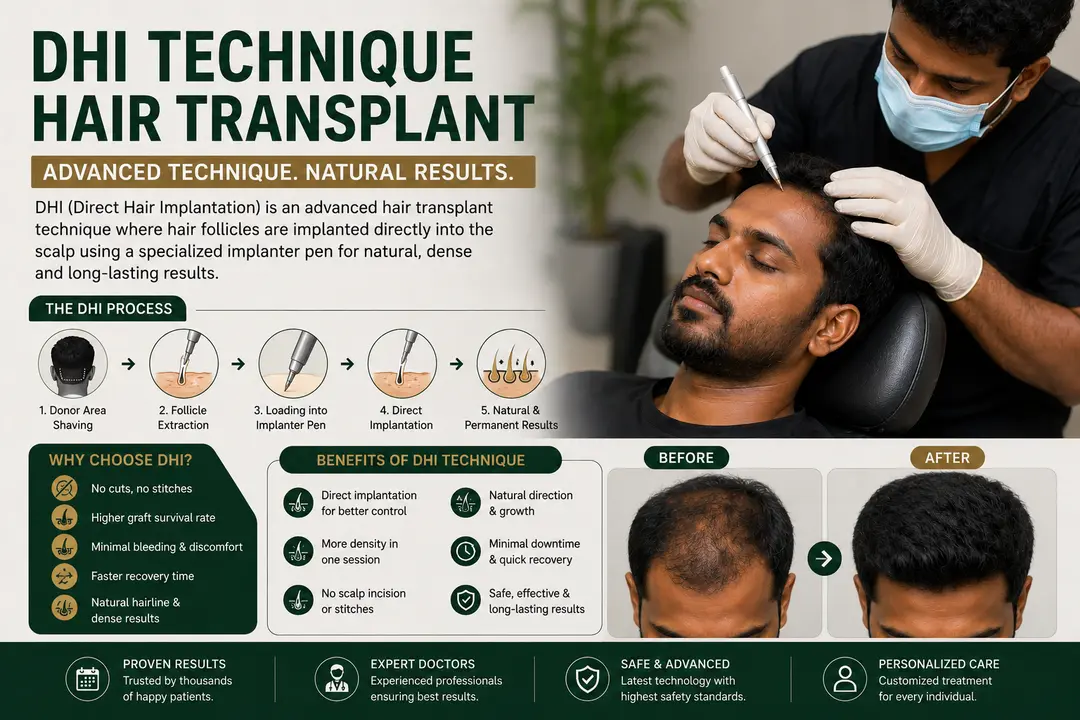
FAQs
1. What is DHI hair transplant, and how is it different from a regular transplant?
DHI hair transplant, or direct hair implantation, is a technique where follicles are extracted and implanted directly using a specialised pen, without creating separate incisions beforehand. This allows for more precise control over angle, depth, and direction compared to some conventional transplant methods.
2. FUE vs DHI hair transplant, which one gives better results?
Both techniques can deliver excellent, natural-looking results when performed correctly. DHI is often favoured for hairline design and precision, while FUE may suit larger sessions requiring higher graft volumes. The best choice depends on your individual hair loss pattern and goals, which your trichologist can assess during consultation.
3. Is DHI hair transplant painful?
The procedure is performed under local anaesthesia, so discomfort during the session is minimal. Mild soreness or tenderness in the days following the procedure is normal and manageable with the aftercare guidance provided by our team.
4. Why are so many patients considering DHI hair transplant India over international options?
India, including cities like Coimbatore, now offers access to the same advanced DHI protocols and tools used internationally, delivered by experienced specialists, at a significantly more affordable cost, without compromising on quality or safety standards.
5. How long do the results of a DHI hair transplant last?
Since donor hair used in the transplant is typically taken from areas genetically resistant to hair loss, results are generally considered long-lasting. However, maintaining overall scalp health and following your trichologist’s aftercare guidance plays an important role in preserving results over time.
6. Can I get a consultation before deciding on surgery?
Yes. We recommend every patient begin with a detailed trichoscopy and consultation at our clinic to determine candidacy, expected graft numbers, and whether DHI, FUE, or a non-surgical option is the most suitable path forward.