
Female Hair Transplant in Coimbatore: Cost, Before and After Results, and What to Expect
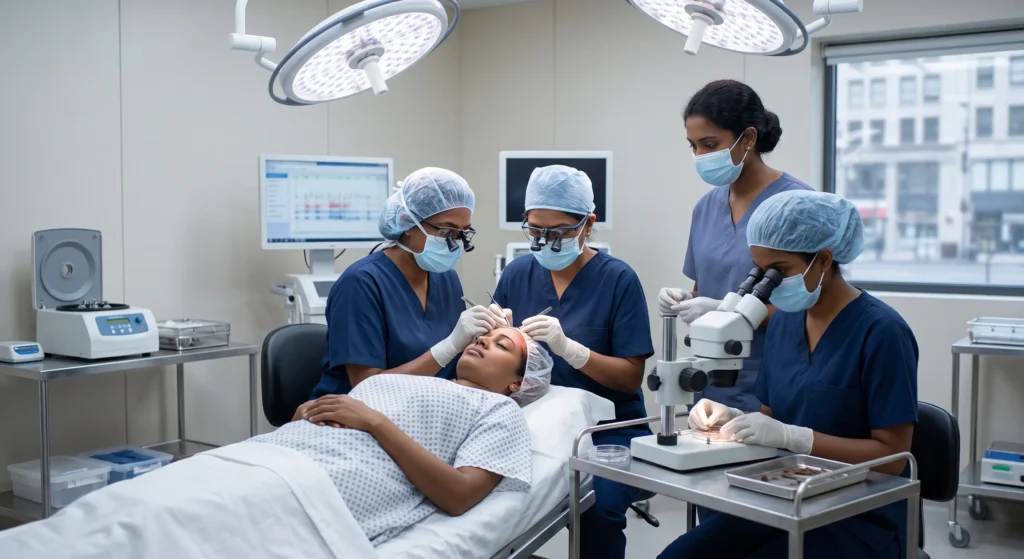
Hair loss in women is often talked about far less than it should be, even though it affects a significant number of women at different life stages, and for very different reasons than male pattern baldness. If you’ve been researching female hair transplant options, you’ve probably noticed that most information online is written with men in mind. At Keva Hair Care Clinic, Coimbatore, we treat female hair restoration as its own specialized area because the causes, patterns, and techniques involved are genuinely different. Here’s a clear, honest guide to what female hair transplant actually involves. Why Female Hair Loss Needs a Different Approach Unlike male pattern baldness, which typically follows a predictable receding hairline and crown thinning pattern, hair loss in women is usually diffuse, meaning it thins evenly across the scalp rather than in clearly defined bald patches. This distinction matters enormously when planning a female hair transplant, since the donor area, graft distribution, and design approach all need to be adapted accordingly. Common causes of female hair loss we see at our clinic include: Genetic thinning that follows a diffuse pattern rather than a receding hairline Hormonal changes, including PCOS, thyroid imbalances, pregnancy, and menopause Traction alopecia from tight hairstyles, extensions, or prolonged tension on the scalp Scarring from previous surgeries, injuries, or cosmetic procedures Telogen effluvium, a temporary but sometimes prolonged shedding phase triggered by stress, illness, or nutritional deficiencies Because the underlying cause varies so much, a proper diagnosis is essential before even discussing whether a female hair transplant is the right solution. Who Is a Good Candidate for a Female Hair Transplant? Not every woman experiencing hair thinning is automatically a candidate for surgery. At Keva Hair Care Clinic, we generally look for: Sufficient donor hair density at the back or sides of the scalp, since diffuse thinning can sometimes affect these areas too, unlike in most male pattern cases A stable, non-progressive hair loss pattern, ideally confirmed through trichoscopy and, where relevant, hormonal or medical evaluation Realistic expectations about density and coverage, since a transplant redistributes existing hair rather than creating entirely new hair growth capacity Cases involving traction alopecia, scarring, or well-defined thinning zones, which often respond particularly well to transplantation For women whose hair loss is linked to an active hormonal or medical condition, we often recommend addressing the underlying cause first, sometimes alongside non-surgical hair regrowth treatment, before considering surgery. Female Hair Transplant in India: Why More Women Are Choosing It Female hair transplant in India has grown significantly in recent years, and awareness is a big part of that shift. For a long time, hair transplantation was marketed almost exclusively toward men, leaving many women unaware that safe, effective options existed for their specific pattern of hair loss. Today, clinics across India, including in cities like Coimbatore, offer specialised protocols for female hair transplant in India, using techniques adapted for diffuse thinning patterns and donor areas that differ from typical male cases. This means women no longer need to travel to a handful of specialist clinics in major metros to access proper care. How the Female Hair Transplant Procedure Works At Keva Hair Care Clinic, a female hair transplant follows a carefully adapted version of the FUE (Follicular Unit Extraction) process: Step 1: In-Depth Consultation & Trichoscopy Given how varied female hair loss causes can be, this step is especially detailed. We assess donor density across the entire scalp (not just the back), review medical history, and, where relevant, discuss hormonal factors before recommending a treatment path. Step 2: Donor Hair Extraction Follicles are carefully extracted from areas of higher density, since diffuse thinning means donor selection often requires more precision than in typical male cases. Step 3: Precision Implantation Follicles are implanted to improve density in thinning zones, with careful attention to maintaining a natural hair growth direction and pattern that blends with surrounding hair, particularly around the hairline and part line. Step 4: Recovery & Aftercare Patients receive a personalised aftercare plan, along with guidance on managing hair styling and care during the healing period, and a structured follow-up schedule to monitor progress. Female Hair Transplant Before and After: What Results Typically Look Like Because diffuse thinning behaves differently from male pattern baldness, female hair transplant before and after results are usually judged by improved density and coverage rather than a dramatically restored hairline. Based on typical healing patterns, here’s what to expect: First 1-2 weeks: Mild redness and small scabbing at the implantation sites, generally settling within a week to ten days Weeks 3-4: Transplanted hairs often shed temporarily, which is a normal part of the growth cycle rather than a sign of failure Months 3-4: New growth gradually begins appearing in the treated areas Months 8-12: Noticeably improved density and coverage becomes visible, particularly in areas that previously showed visible scalp During your consultation, we can walk you through female hair transplant before and after examples relevant to your specific hair loss pattern, whether that’s diffuse thinning, traction alopecia, or scar-related hair loss. Female Hair Transplant Cost in India: What Influences the Price? Female hair transplant cost in India tends to vary more than male transplant pricing, largely because diffuse thinning cases require more individualised planning. Factors that typically affect cost include: Extent and pattern of hair loss: More extensive or widespread thinning generally requires more grafts and more precise donor planning Donor area evaluation: Assessing donor density across a wider area, sometimes requiring additional diagnostic time before treatment Precision required for natural blending: Blending grafts naturally into diffuse thinning patterns typically requires more meticulous, time-intensive implantation Clinic expertise in female cases: A clinic experienced specifically in female hair restoration, not just general hair transplantation, often reflects in both cost and outcome quality Because female hair transplant cost in India depends so heavily on individual assessment, we strongly recommend an in-person consultation rather than comparing generic price ranges online. At Keva Hair Care Clinic, we evaluate your scalp and donor hair first, then provide a